Category Archives: Uncategorized

Williams – Day 1: An ‘optimistic’ start

High Court Media

At the High Court

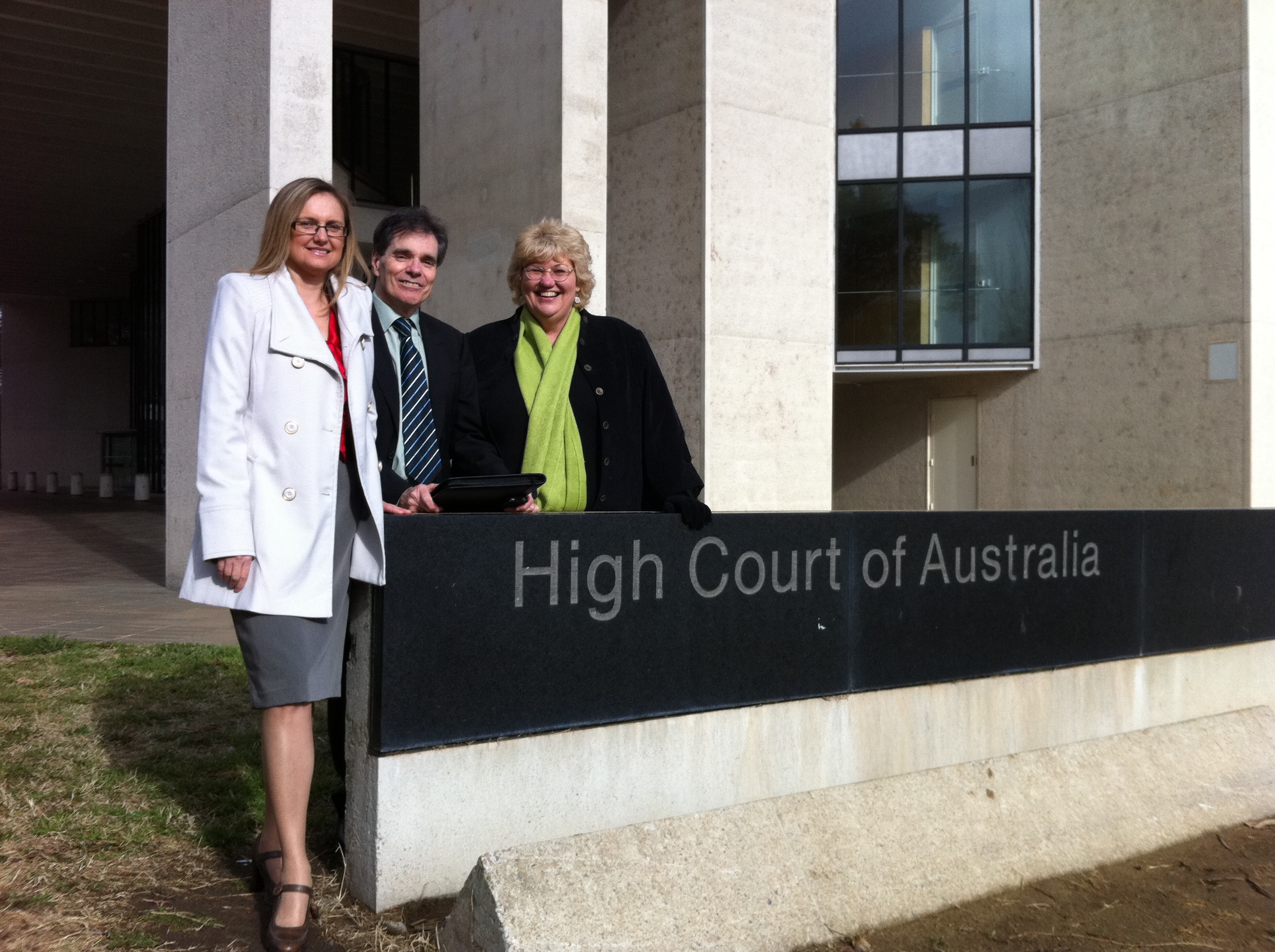
I’m in Canberra with Ron Williams and Hugh Wilson (National Director of the Australian Secular Lobby) for Ron’s second High Court Challenge against the National School Chaplaincy Program.

See my background article on the case here, on Independent Australia.

After a late night blogging about a particularly poor report on the case on ABC’s Lateline program, I surprised how happily I sprang out of bed at 7am yesterday morning. Adrenaline is a wonderful thing.

I wasn’t early enough to beat the indomitable Ron Williams though – he was already up, still in his pyjamas and tapping away on his computer by the time I emerged.

Coincidentally, all three of us are on a health kick, so we decided to walk to the court, a half-hour stroll along Lake Burley Griffin and over the Commonwealth bridge. Canberra in autumn is beautiful – crisp and clear and cold, but not bone chillingly so.
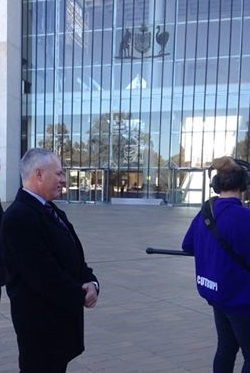
High Court Media 2In the forecourt of the High Court building Ron was immediately cornered by media. As he was interviewed by AAP (see article at The Guardian), Peter James, CEO of Scripture Union Queensland, looked on.

University studies support Chaplaincy?

When it was time for James’ interview, we were a bit bemused to hear him insist that two university studies had confirmed that  “students, teachers and psychologists all valued the program”.  Hmmmm!

The first, ‘The Effectiveness of Chaplaincy’ by Dr Philip Hughes of Edith Cowan University and Prof. Margaret Sims of the University of New England was the subject of close investigation by Greens MP and academic, John Kaye.  The Greens challenged the validity of the report which has never gained currency with anyone but the vested interests it serves. 

Dr Kaye (who has a Masters in Engineering Science from the University of Melbourne. and a PhD from the University of California, Berkeley), was scathing in his criticism of the sloppy research method employed in this report.

But further – and this is something Peter James really should mention – the report failed to disclose that Hughes, the lead author,  was employed four days a week by the Christian Research Association, a group established and administered by the very same churches that provide many of the chaplains.

The methodological flaws, the failure of the report to justify its own conclusions, and Dr Hughes’ failure to disclose his conflict of interest combine to make this particular ‘university study’ highly questionable as ‘evidence’ for the value of school chaplaincy.

Mr 97% Porkie Goes to Parliament from Secular Public Education Lobby on Vimeo.

The second study was harder to locate but Peter James, we think, may be referring to a PhD thesis (by definition, NOT a university ‘study’)  by David John Pohlman – now a …. wait for it … chaplain with Scripture Union Queensland.

The only other ‘study’ I can find is referred to in SUQ’s ‘special case’ document, submitted to the High Court. It refers to a ‘pilot’ project, a ‘paper-based survey’ conducted during the annual SU Qld chaplains’ conference in August 2013, but I can find no reference to the participation of any university.

By any measure, these are hardly ‘independent’ studies on which any kind of government policy could be, or should be, based.

Of course, as I explained in yesterday’s blog post, the fact (or otherwise) that the chaplaincy program is ‘popular’ has absolutely nothing to do with the Williams case and will have no influence whatsoever in the decision of the High Court.  Peter James is a solicitor so he is obviously well aware that what he is feeding the media is irrelevant to the case before the court; it’s all part of the winning the propaganda war.

Pollies dodge a bullet

BilinskySoon after the media interviews, Ron’s solicitors, Claude Bilinsky and Liam Carney emerged from the High Court building for a pre-hearing chat.

Bilinsky reminded me that prior to Williams’ first hearing the statute books recorded the expenditure of money from Consolidated Revenue without appropriate approval as a jailable offence for the responsible government ministers. Strangely, after Williams’ first hearing (but before the decision was handed down) , that particular law was quietly removed from the books. Amazing, the power of the parliament, eh? Why did the media never pick up on that nifty little duck and weave?

The case begins

And then, it was into the High Court for the first day of the hearing in the matter of Williams v the Commonwealth and Others. I sat with Ron, Hugh, our friend Dr Nelson Lau (our unofficial photographer), and local supporter, Emeritus Professor Dr Robert Gregson from the Australian National University. Before us sat nearly 40 solicitors and barristers – representatives of the plaintiff (Williams), the defendants (the Commonwealth of Australia, the Minister for Education and Scripture Union Queensland) and the six intervening states (Queensland, NSW, Victoria, South Australia, Tasmania and Western Australia).

I nudged Ron.

“This is all your fault!” I said.

“I know!” he smiled, “You couldn’t write a script as bizarre as this! Perhaps I should just stand up and plead guilty now.”

Ron’s barrister, Bret Walker SC was the first to address the bench. Only six (rather than the usual seven) justices are hearing this case; Justice Gageler having recused himself because he was involved as solicitor-general for the Commonwealth in Williams’ first case.

The problem with Section 32b

Walker (unlike the media and SUQ) zoned in on the crux of the Williams (2) with pinpoint accuracy.

The proceedings, he said, are to test the validity of a ‘repair act’, now Section 32b of the The Financial Management and Accountability Act 1997. This section was introduced in the wake of and as a response to the decision in Williams’ first case. The premise of S 32b, said Walker,  is based upon a perceived lack of power; the power to expend money without supporting legislation. It’s purpose is to provide Parliament’s assent to delegate legislative authority to the Executive.  Its affect is to authorise expenditure ‘in blank’; effectively providing the government with a blank cheque to spend on anything it likes without the authorisation of the Parliament.

In a complaint that would be echoed throughout the day by the various states’ representatives, Walker pointed to the exceptionally vague and general terms in which S 32b is framed.  Questions are raised by this legislation, said Walker, but no answers supplied; where specification is needed, there is silence.

32b provides no fine detail about the grants or programs authorised under its umbrella. All that is included is the name of the program and a short comment on its ‘purpose’.

Later in the day, the vagueness of the programs funded was pointed out by one of the solicitor’s general:

The “Tasmanian Forest Industry Adjustment”, the “Australian Animal Welfare Strategy” – the titles provide no specificity about the programs at all. There is no detail by which the appropriateness of the expenditure can be judged, and yet, S32b authorises expenditure based on no more detail than is provided by a vague title and a general statement of ‘purpose’.

The terminology used in the amendment, Williams’ barrister suggested, is so imprecise as to be meaningless. Its breadth is ‘legislatively uncontrolled’.  Indeed, S32b is a remarkable proposition in its generality. Read literally, it says that if the Commonwealth doesn’t have the power to act …. the Commonwealth has the power (by virtue of this legislation).

For Walker, it seems inconceivable that a statute providing the Commonwealth with almost unlimited power to spend money without the proper scrutiny and assent of the House of Representatives and the Senate could be considered ‘valid’.  It is beyond legislative competence to enact a law providing the legal power to spend ‘in blank’.

The legislation, he explained, delegates almost unlimited power to the government to spend money, without the approval of parliament, on almost anything.

The programs listed in the schedule, are ‘utterly unlimited in their scope of subject matter’.

It is, said Walker, an act of supererogation on the part of the Commonwealth Parliament – a statute that goes far too far. Section 32b, he said, travels too far beyond the law-making function. In Walker’s opinion, S 32b does not meet the threshhold of a law at all as (in practical, legal terms) it cannot do what it purports to do – i.e.  provide the government with unlimited power to spend.

So vague, so general is this ‘punitively, excessively broad statement’ said Walker, it simply cannot be valid.

The solicitor-general for WA agreed, noting that the greater the extent of power authorised by an Act, the less likely it is to be a valid delegation; and S32b grants almost unlimited power to the executive to spend money without the authorisation of the Parliament!

The only way 32b might become valid is for it to be ‘read down’; that is, interpreted by the court in some narrow sense that would limit its power.  But, said Walker, despite using language which ‘cannot on its face be taken literally’, neither can it be read down for “Where does one read it down to?”

The argument seemed to be that the only way this legislation can work is for it to be read literally, but reading it literally makes it antithetical to the ruling in Williams’ first case.

It is, said Walker, an ‘extraordinary pseudo-law’ which ‘fails in its entirety.

Recognising the obstacle posed by the High Court’s ruling in Williams (1), the Commonwealth has argued that it should be ‘revisited’. There were issues in that case, the Commonwealth complains, that were not properly interrogated by the justices. It’s an argument that didn’t seem to fly with the Justices and the feeling in the court was that it’s highly likely the decisions made in Williams (1) will stand.

Walker was scathing in his response to the Commonwealth’s implied criticism of the decision in Williams (1). It must be the proposition, he said, that the case was decided wrongly because the reasons advanced by the justices were wrong. It constitutes, he said, a thorough-going criticism of the court which is without foundation.  It is not ‘ordinary’ he said to ask for a case heard in the High Court to be re-opened. There is no reason to say that what stands in law should be reversed. To say otherwise threatens the integrity of the court and the stability of its decisions.

As the day moved on, each of the states’ solicitors-general, with the exception of Queensland, agreed (broadly) with Walker’s views on S 32b.

Five of the six states agreed that the legislation could not be ‘read down’.

The solicitor-general for Victoria noted that the Commonwealth seemed to imply that S32b would be ‘read down’ by means of ‘regulations’ imposed upon it. But, he said, there is no head of power, no ‘foothold’ to limit what the executive is capable of doing under S 32b and no criterion by which it can be read down.

Queensland, however, argued that the legislation may be valid, even though funding for discrete programs specified within its schedule (the laundry list of ‘allowable’ programs) may not be.

NSW complained that S 32b was ineffective in meeting Constitutional requirements, not to mention the requirements confirmed in the Williams (1) ruling. The solicitor-general for NSW also noted that 32b authorises a minister to delegate his or her authority to sign off on expenditure to a public servant ‘well below’ the status of a person responsible to the government. It allows millions – even billions – of taxpayers’ money to be spent, without parliamentary authority, at the stroke of a bureaucrat’s pen.

In the opinion of NSW, S32b ‘fails as a law in respect to any identifiable head of power’.

NSW insisted that, in line with the court’s decision in Williams (1), parliamentary scrutiny is required for expenditure and the Parliament cannot abrogate that responsibility.

In Williams (1) it was made clear that an ‘appropriation’ – the Parliament’s assent to a request to ‘set aside’ funds for a specific purpose – does not (as previously supposed) provide sufficient authority to actually spend money. For that to occur, legislation must be enacted after parliamentary scrutiny of a Bill pertaining to the specific program or grant on which money is proposed to be spent.  S 32b completely circumvents both the need for legislation and for detailed parliamentary scrutiny of the subjects of expenditure. S 32b provides blanket approval based on no more than a title and a brief, vague, generalised descriptor of its ‘purpose’.

Further, the government has supposed that, with the benefit of S 32b, it no longer needs a ‘head of power’ to expend money. If the Constitution does not provide it with the authority to spend money for a particular purpose, 32 b does. In this sense, 32 b acts outside of the Constitution in a way that cannot possibly be validated by the High Court whose role is to protect the authority of that document.

It was also pointed out by the solicitor-general for Tasmania that, if S 32b is valid, then it leaves no purpose for S96 of the Constitution which enables the Commonwealth to make grants to States. There is no need to make a grant to a State if the Commonwealth is authorised to spend the money itself. The separation of powers inherent in a Federation are completely undermined and, again, S32b seems to undermine the Constitution.

The submission of the Commonwealth, said the solicitor-general for Tasmania, seeks to diminish the concept of Federation endorsed by the founders of our Federation.

Power to spend

Yet, at least in respect to the National School Chaplaincy Program, the Commonwealth insists that it does have Constitutional authority with reference to sections  51(xx) and section 51(xxiiiA) of the Constitution with respect to trading corporations and the provision of benefits to students; this, despite the High Court having ruled otherwise in Williams (1).

The question raised by Walker is, that if the Commonwealth already has legislative power to spend, what is the purpose of S32b? And if it does not have the power to spend and S32b provides it, then 32b’s purpose must be to override the Constitution.

Walker insisted that the National School Chaplaincy Program does not meet the criteria of providing ‘benefits to students’ as intended in the Constitution. For example, he pointed out, to be eligible under this head of power, the ‘benefit’ has to be endowed on a voluntary basis. While the guidelines for the NSCP did, once, stipulate that students’ engagement with the program was ‘voluntary’, that word has since ‘disappeared’ from the amended description.

Further, to be considered ‘a benefit to students’, the ‘benefit’ has to be uniquely applicable and relevant specifically to someone’s ‘character as a student’ – e.g. the provision of a lap top computer. In the case of school chaplaincy, the guidelines themselves stipulate that the ‘benefit’ serves the ‘school community’, not students exclusively, and the ‘benefit’ supplied is not anything material or tangible – e.g. money or a piece of equipment. The purported benefit, said Walker, is ‘obscure’.

The Commonwealth also claims Constitutional authority under the provision which allows it to make contracts with ‘trading corporations’. Scripture Union Queensland, the recipient of millions of dollars of taxpayers’ money, is not, however, a ‘trading corporation’. The requirements to meet the definition of a ‘trading corporation’, said Walker are ‘completely absent’. It is, he said a ‘hopeless proposition’ that spending for the NSCP is authorised in this way. Indeed, one of the solicitors-general ventured that even if SUQ was deemed to be a trading corporation, this would not be sufficient to validate the expenditure on the NSCP.

Conclusion

At the end of the first day’s hearing, we were delighted to see Ron’s barrister emerge from the court with a beaming smile on his face. Ron had been asked, earlier, in an interview if he thought he would win. He replied, cautiously, that one could never tell with these things but that he was ‘optimistic’.

Optimism was certainly the mood following the first day of Wiliams (2).

Section 32b appeared to have been left in tatters on the courtroom floor and there seemed to be no support for the contention that the ruling in Williams 1 (that expenditure requires approval through the passage of a Bill) should be overturned.

Today, we shall hear arguments from the Commonwealth …

Chrys Stevenson


Williams Day – 1: It’s about the Constitution, stupid!

In a fairly surreal moment, I’m sitting on a sofa next to Ron Williams in a Canberra apartment, watching Ron Williams on ABC’s Lateline.

Ron LatelineThe interview, focussing on Williams’ second High Court challenge to  Federal funding for the National School Chaplaincy Program, took place earlier in the afternoon in this same apartment, soon after we arrived.

Ron and I, along with Hugh Wilson, National Director  of the Australian Secular Lobby, are ‘housemates’ for the next week. It’s an unofficial ‘team’ and our apartment has quickly become the unofficial HQ for Ron’s many Canberra friends and supporters.

The Lateline story comes up and we watch, with some dismay, as Ron’s novelty song, “Why Don’t Bees Go to Heaven?” plays as an intro.

Really? Really????? Bees?????

Our eyes widen and we look at each other in disbelief.

In the Sydney Morning Herald today, constitutional expert, George Williams, referred to the forthcoming Williams case as “the most anticipated of the year”; a case that could “could rewrite the book on how the Commonwealth and the states spend public money.”

And yet, instead of an interview with Professor Williams  explaining how Ron’s case could rewrite Australian Constitutional history, Lateline wasted valuable airtime playing a fun but totally irrelevant song that has nothing, zero, zilch, nada to do with Williams’ case.

In my own article, published today at Independent Australia, I explain how the Williams case has evolved beyond its initial focus on school chaplaincy to a defence of representative democracy and financial accountability.  It’s an angle that seems to have eluded the producers of Lateline.

Whoever put this story together seems to have thought – mistakenly in my view – that it needed ‘padding’.

God forbid (no pun intended) that Eddie Mabo or Brian Pape had released a music video prior to their forays into the High Court! Would Aunty have thought it appropriate to cut their playful little ditties into stories about their landmark Constitutional cases? Would reports on Mabo have benefited from a peppy little jingle? 

Williams vs the Commonwealth and Others (2) will be played out in the High Court of Australia over the next three days. This is a deadly serious, historic case on a crucially important issue affecting all Australians.  It’s up there in importance with Mabo and Pape.  It deserves a little respect. It didn’t get that respect tonight on Lateline.

The Williams case is not just about chaplaincy. It’s about whether the Federal government should, arbitrarily, be able to sign off on massively expensive programs without jumping through the hoops put in place by the Constitution.

It’s also about the questionable validity of fundamental changes that have been made to the ‘rules’ about government spending; changes which seem to ignore the principle that, in a representative democracy, government expenditure requires parliamentary scrutiny.

Constitutional expert, Anne Twomey, describes the Federal government’s cynical response to the decision in Williams’ first case as “… an abject surrender of its powers of financial scrutiny to the Executive”.

Apparently John Stewart and the producers of Lateline didn’t think that provided enough interest for ABC viewers.

I can just imagine the production meeting:

“Yeah, yeah, selling out representative democracy so that governments can fund pork-barrel programs, circumventing a decision of the High Court, rubber-stamping billions of dollars of government expenditure, spending half a billion taxpayers’ dollars to buy votes from the Christian right … It’s all very well, but where’s the public interest, guys? Where’s the hook?”

“I know! Williams is a singer. What this story really needs is music.”

Seriously, ABC? Seriously?????? Has it really come to this?

And, at issue, isn’t just the use of the silly song, the presentation of an historic constitutional case as a ‘fluff’ piece and the implication that ‘atheism’ is the driving force behind Williams’ attack on chaplains (it isn’t, as Ron would happily have explained to Stewart if Stewart had bothered to ask (but didn’t)).  What really irked us is that the story completely misrepresented what the case is about.

Hugh Wilson and I winced in unison as Peter James of Scripture Union came on to repeat  the now familiar SUQ mantra that chaplains are wonderful people doing great work in our schools. Maybe they are, maybe they aren’t. You wouldn’t expect James to say anything else. But a senior political journalist reporting on a High Court case should have realised (and perhaps found someone to explain to viewers) that the performance of chaplains is absolutely irrelevant to the success or failure of the Williams case.

The great pity is that neither the non-government defendant (Scripture Union) nor John Stewart,  seem to grasp one very simple concept about Williams vs the Commonwealth and Others:

It’s about the Constitution, stupid!

This is a case before the High Court of Australia. It’s not about whether chaplains are helpful. It’s not about whether Ron Williams is an atheist, an apiarist, a Buddhist, a new-age crystal-gazing hippie or a jumping Calathumpian. 

The High Court rules, exclusively, on Constitutional issues. The High Court doesn’t care whether chaplains are good, bad or indifferent. It doesn’t care about Williams’ religious beliefs. These things are totally irrelevant to the Williams case.  

What is relevant is that the High Court has already ruled in Williams (1) that  successive Commonwealth governments have been spending taxpayers’ money without appropriate authority and beyond the limits of their constitutional powers.

What is relevant is that in order to continue doing what the High Court said they shouldn’t, the government passed legislation which undermines the Constitutional role of the House of Representatives and the Senate in approving expenditure.

What is disappointing is that in a four minute story, Ron singing a fun, but ultimately meaningless song about bees was inexplicably deemed more important than explaining to the Australian public why this case should matter to them  – regardless of their views on chaplaincy.

After the program, we had quite an animated discussion about the story.

What was the point of cutting in Ron’s “Bees” video?

To add  ‘entertainment value’ to an otherwise dull story?

To diminish Ron’s credibility with the public?

To flesh out a story a journalist mistakenly thought had insufficient substance?

Who knows?

“It’s disappointing,” said Hugh Wilson, “that a high quality program like Lateline with a top-notch political journalist like John Stewart would stoop to cheapening an important story with irrelevant fripperies.”

“The producers have confused an important constitutional issue with a personal point of view and a rorting of the system with a novelty song that predates the High Court Challenge,” Wilson lamented.

I was a little more sanguine. The song was, after all, in the public domain. I  thought it was probably predictable (if both lazy and disappointing) that a journalist or producer would think it was a good idea to use it as ‘leavening’ for a story that could have stood on its own merits if only they’d taken the time to understand it. Ron was his usual calm self, but perhaps a bit puzzled that a journalist of such long experience could so cavalierly undersell the national significance of the case.

Ultimately, we decided, it was of no great import. The poor and arguably irresponsible reporting of the Williams’ case on Lateline will have no bearing on the decision of the High Court. Ultimately, the choices made in presenting the story reflect more poorly upon Lateline’s credibility than Williams’ reputation.

And now,  it’s the wee, small hours of the morning and both Ron and Hugh have, sensibly, retired. They have lost, I expect, not one jot of sleep over a story we had rather hoped would be good, but wasn’t.

And having vented my spleen, I’m heading off too; because what happens tomorrow, in the High Court, amongst professionals who actually understand what this case is about, is what counts – not just for Williams but for every Australian.

It’s about the Constitution, stupid.

Chrys Stevenson

If, unlike Lateline, you understand the significance of this case and appreciate that a suburban Dad with very little money has had the guts to take on the Federal government, not once, but twice, in the High Court, you can donate towards Ron Williams’ legal fees at his website: http://highcourtchallenge.com

Williams Article at Independent Australia

Photo courtesy Nelson Lau

This afternoon, Ron Williams, Hugh Wilson (Australian Secular Lobby) and I arrived in Canberra where Ron will, once again (Tuesday 6 May to Thursday 8 May), take on the Federal Government in the High Court over funding for the National School Chaplaincy Program.

I’ll be blogging as often as possible from Canberra and tweeting using the hashtag #HCC2. Please be sure to follow Ron and me on Twitter – @Chrys_Stevenson and @HighCourtNSCP.

This morning, online journal, Independent Australia published my article explaining why this new High Court Challenge has implications far beyond the continuation or abolition of the National School Chaplaincy Program; and why all Australians should wish Williams well, regardless of their views on chaplaincy.

Ron Williams’ High Court challenge – its not just about chaplaincy

Embedded in the article is a short, 15 minute video by Ron featuring his take on the case and the reasons why he decided to continue his fight.

We would be very grateful if you could share the link to the article widely among your networks – perhaps even blog about it if you can.

It’s important to dispel the myths about the case.

Ron is also in urgent need of financial support to meet his legal costs, so the more people who know about the importance of this case, the more chance of him receiving donations at his website:  http://highcourtchallenge.com

We’ll be very grateful for your help in promoting the link to the article.

If you support Ron in his challenge, please consider donating towards his legal costs. The costs awarded from the last case have not yet been paid and will not completely cover all his expenses. Money donated goes only towards paying legal fees. Please donate at:

Donations: High Court Challenge

Chrys Stevenson

National School Chaplaincy – The Movie

Ron Williams, Maria Proctor (Humanist Society of Queensland) and me outside the High Court in 2011. Photo by Nelson Lau.

Ron Williams, Maria Proctor (Humanist Society of Queensland) and me outside the High Court in 2011. Photo by Nelson Lau.

From 6-8 May, Ron Williams will return to the High Court of Australia to contest the funding of a program which, to date, has cost Australian tax-payers around half a billion dollars. At a time, when ordinary battlers – including old-age pensioners – are being told they must ‘tighten their belts’ for a country that is facing crippling debt, the government sees fit to spend hundreds of thousands of dollars defending a program for which no need has ever been identified, no means of measuring outcomes or accountability applied, and no credible academic research has justified; a scheme which the High Court has already ruled ‘unconstitutional’.

The National School Chaplaincy program is one of hundreds of ‘pork-barrel’ programs which successive governments have funded as ‘executive schemes’ without the benefit of legislation. This means they circumvent the democratic process and clause-by-clause scrutiny afforded to the passage of a Bill through the House of Representatives and the Senate. Such programs are also exempted, post implementation, from investigation by various administrative tribunals.

Today, Ron has released a short, 15 minute film which gives an overview of the National School Chaplaincy Program, his successful challenge to its funding and the reason why he has been forced to mount a second challenge.

In the movie, Ron describes the National School Chaplaincy Program as:

“… possibly the most outrageous political stunt ever foisted upon the taxpayers of Australia.”

Please take the time to watch the film and share it widely with your networks. We need as many people as possible to see it!

In June, 2012, the Justices of the High Court of Australia ruled that Commonwealth funding of the National School Chaplaincy Program is unconstitutional.  Effectively thumbing their collective noses at the High Court, the Commonwealth defied that ruling by rushing through ’emergency’ legislation in the form of the Financial Framework Legislation Amendment Bill (No. 3) 2012.

At the time, the current Attorney-General, George Brandis spoke against the Bill (even though his party ultimately voted in favour of it):

“What is most extraordinary above all is the fact that the Commonwealth Government seems so determined not to listen to the High Court. It ignored the High Court’s judgment in the Pape case, merrily going on with funding of bodies and programs without sufficient legislative power. In response to the Williams case it simply enacts a law that attempts to restore what it wrongly believed to be its former powers, without actually listening to or taking to heart the High Court’s concerns about a democratic deficit, the important role of parliamentary scrutiny and the importance of federal considerations. This Bill, in a bald-faced manner, rejects the fundamental propositions put by the High Court in the Williams case. The Commonwealth is clearly asking for another clobbering by the Court.”

Yet, his government is still determined to waste more taxpayers’ money to go back to the court to defend the indefensible!

The cost of mounting (and defending) a High Court Challenge is astronomical. It’s expensive for Australian taxpayers but the cost of two cases has now had to be borne by an ordinary suburban Dad who is very, very far from wealthy.  Yes, Williams was awarded costs from the last case but nearly two years on, he has still not been reimbursed by the Commonwealth.

Ron Williams is an everyday battler who thinks our government should respect the High Court, the Constitution, our secular society, and the principle of the separation of church and state. Like any Australian citizen, he expects that the processes of representative democracy will be followed – particularly in respect to the expenditure of hundreds of millions of dollars of taxpayers’ money.

With the support of his wife, Andrea, Ron has put his family’s financial well-being on the line to stand up for these principles and a secular public education for his kids.  He’s an ordinary bloke, standing up for what he believes in, at enormous personal expense – both financial and emotional.

If you can help Ron out financially, I know it would be greatly appreciated.  Donations – large or small – can be made through Ron’s High Court Challenge website.  It’s not often that we ordinary folk have a chance to participate in making Australian constitutional history! Please donate and be a part of it.

I will be travelling to Canberra with Ron and Hugh Wilson (Australian Secular Lobby) in May and reporting each day’s events from the High Court.

Chrys Stevenson


Donate to the Ron Williams’ High Court Challenge to Commonwealth funding for the National School Chaplaincy Program here.


Direct link to Williams’ National School Chaplaincy movie – http://highcourtchallenge.com/nscp-movie.html


As old as Rosinante

rosinanteFailed politician Bernard Gaynor has persistently directed a stream of venomous, misinformed, ideologically twisted abuse towards high-profile, transgender army officer, Lt Col Cate McGregor. Following his lead, (absent any evidence whatsoever), I returned the favour with a soliloquy on the probable diminutive dimensions of Mr Gaynor’s reproductive organ.

The initial run of comments from Christian conservatives was predictable given I’d let the genitalia genie out of Bernie’s boxers. It was variously assumed I was a gay male, or a woman suffering from testicle envy. I was told that if my fanny was as big as my mouth it would be a yawning chasm.  I was likened to a street whore; a ‘cheap, nasty, unappealing caricature of womanhood’. I was accused of being unfunny, unintelligent and a ‘despicable, vile dissembler’.

An argument I didn’t anticipate, however, is that, as a 55 year old woman, I am too old to be publicly speculating about the size of a 33 year old man’s penis. That rather took the wind out of my sails. It was the first time in my life  anyone has suggested my age should govern my behaviour.

“There’s something disturbing about a woman your age discussing the penis size of a much younger man,” said a reader, calling herself “Aienna”.

To be frank, neither my age nor Gaynor’s had entered my mind when I set to writing about his wee willy. I had no idea of his age and I think of my age so seldom I have trouble remembering when somebody asks.

Bernard Gaynor, I was hastily informed, is 33 years old, “the age at which Jesus Christ was crucified”. I wondered at the compulsion to use such a tenuous connection to link Gaynor with Christ. Did the correspondent anticipate Gaynor’s martyrdom at my whorish heathen hands was destined to be immortalised in stained glass icons depicting The Emasculation of St Bernard?

The Emasculation of St Bernard! Oh dear! It does rather make one think of a very large dog bearing a little wooden cask of brandy getting ‘the snip’, doesn’t it? Perhaps that’s what the brandy’s for!

“You are a decrepit old tart, Chrys,” wrote a critic called James, all too keen to remind me that dried up old crones like me have no place criticizing upstanding young men like Gaynor.

“Bernard Gaynor is young enough to be your son. You left it too late to get in the groove. This is the digital age. 45s and LPs are museum pieces like you.”

My sin in riffing about Bernie’s cock size was compounded when another of his defenders challenged my refusal to admit to the ‘ickiness’ of same-sex intercourse by asking how I’d feel if my ‘significant other’ harboured homoerotic fantasies.

My admission that I’d think it was ‘hot’ only seemed to inflame the situation. I was branded (to my great delight) as “a poor woman’s Catherine Deveny” given that my “standards are lower than most women of similar socio-economic cultural background”.

The issue, James insisted, is the “standard of behaviour expected of women the age of Rosinante”.

I have to admit to a great hoot of laughter at being compared to Rosinante, Don Quixote’s ancient, sway backed, emaciated old nag.

What my apparently half-educated critic failed to understand was that Rosinante (aka Rocinante) literally means formerly (ante) an old hack (rocin).

In the eyes of Cervantes’ hero, Don Quixote, the animal transformed from an old farm horse into a noble steed. The name, Rosinante, was deliberately chosen (both by Don Quixote and his creator, Cervantes) to reflect that elevation in status. Having undertaken a rather major transformation myself lately, I’m pretty happy with the comparison.

Of course, James intended it as an insult. But, to his credit, he made me think: is there really some ‘standard of behaviour’ expected of women my age? If so, I think I missed that memo.

Is there really an expectation that a woman of my age shouldn’t discuss penises or think gay sex is hot? What else is verboten? Should I throw out that cute little neon lime mini skirt and start wearing “Osti” polyester dresses? Do I need to ditch the high heels in favour of sensible shoes? I guess the balconette bras will have to go. Should I learn to play pinochle, take up crochet, and buy a budgie?

My mother is nearly 90 years old. She still wears jeans and high heeled boots and has the figure of a woman 75 years her junior. To my recollection she has never acted – nor even thought about – what is appropriate for a woman of ‘her age’.  As a result, despite now being in the early stages of Alzheimer’s, she is active, fashion-conscious, and progressive in her social and political views.

When she sees television reports about homosexuality she often reflects wistfully, “I would have liked to have had a gay son.

When she was approached by religious hawkers as she weeded our front garden, recently, she warned, “Oh, you’re wasting your time with us, dear. We’re atheists.”

Because of my mother, I maintain close links with a number of octo- and nono-genarians. They don’t seem to conform to any unwritten rule about acting their age either.

Recently, I confided to a very elderly female relative that I’d developed a minor but rather embarrassing infection that was likely to put a damper on a long-awaited romantic tryst.

“Don’t worry about it, darling!” she comforted me. “You can just give him a blow job.”

Oh! Ok, then!

It may be news to Bernard Gaynor and his ilk, but we ‘older women’ not only like talking about sex, we rather like having it.

An article on Slate this month reported that women over 70 are having the best sex of their lives. According to researcher, Bylris Kraknow, one 77 year old was inspired to try fellatio for the first time after watching a YouTube video titled “Learn How to Give a Blow Job Like a Pro.” Clearly determined not to appear like a rookie, she practiced, first, on a banana. If only James had been around to educate her about the ‘standard of behaviour’ required of a woman of her advanced years. I like to think she might have responded by speculating on the size of his todger.

Another septuagenarian confided, “I’m 72 and I am having the best sex I’ve ever had in my life.”

So hot were the elderly woman’s sex tips, said Kraknow, she felt the need of a post-interview ice bath.

At 55 years old I feel I’m at my intellectual, sexual and physical peak.  Is this really a time when I should be monitoring how I dress, what I say, how I act and what I think based on some unwritten rule that I should ‘act my age’? And, indeed, if my friends are any kind of barometer, I am acting my age.

What I’m not doing is acting like a 55 year old woman who was brought up under the paternalistic, misogynistic restrictions of the mid-nineteenth century. My sin is that I have failed to affect the demeanour of a sexless old spinster. I have committed the felony of abandoning my knitting for social engagement. I have shamelessly dared to ridicule, not just a man, not just a God-fearing man, but a younger man. In doing so, I have, apparently disrupted the ‘natural’ hierarchy of social power.  God knows, I’m probably responsible for a tear in the space-time continuum. I am, according to Gaynor’s defender, James, “a walking violation of nature”.

And here is the bad news for the religious fundamentalist fuddy-duddies whose image of femininity harks back to the days of farthingales, phaetons and fans. Women have long since realised that the status quo does not serve our interests. Women, of any age, will not be silenced by your pursed-lipped, mealy-mouthed, admonishments that we should behave ‘like ladies’ or act ‘our age’.  We will not be controlled or subdued by your anachronistic self-serving ideals of femininity. We will not set aside our sexuality when we have passed breeding age. And we won’t be shamed into silence by slurs relating to our age, looks, weight, sexuality, political or religious beliefs.

And here’s some more bad news, boys – being male no longer gets you a free pass. Act like a donkey and some woman’s going to call you an ass. Act like a dick and some woman’s going to speculate on the size of yours.

I may be as old as Rosinante but I’m still up for a good gallop, a roll in the hay and a bout or two of tilting at windmills.

Chrys Stevenson

Is Woody Allen guilty? I don’t know – and neither do you

It seems I’ve failed Feminism 101 and lost myself a few friends this week.  It’s not the first time I’ve failed to side with the sisterhood and I doubt it will be the last. C’est la vie.

My ‘F’ minus’ in Feminism comes as a result of my refusal to accept that Hollywood director, Woody Allen, is a definitely a pedophile based on the supposedly incontestable  testimony of his adopted daughter Dylan Farrow.

Let me make my position clear.

At no point have I argued that Dylan Farrow lied in the open letter that was published in the New York Times.  I have no doubt that Dylan Farrow believes every detail of the allegations she has made against Woody Allen.

I think there is no doubt whatsoever that Dylan Farrow is the victim of parental abuse. I do, however, think there is a question about which parent was the abuser.

I have not ‘defended’ Woody Allen, nor insisted that he is innocent. I have simply stated, repeatedly, in numerous online discussions that both sides have compelling arguments and that the general public (of which I am a member) should concede that we don’t know enough about this case to make a determination either way.

Sure, Woody Allen might be guilty, but despite an investigation at the time of the initial allegation and in the 20 years since, that has not been proven.

I have little interest in Woody Allen or his movies. As a woman – indeed, as a human being – I am, of course, deeply concerned about the ghastly damage inflicted upon the victims of sexual assault, particularly when the victims are children.

There are few women, myself included, who have not experienced sexual assault to some degree. Dylan Farrow is clearly a brave young woman who has been through an incredible amount of pain. I am well aware that, having told her story, that pain is made infinitely worse by suggestions that she is ‘making it all up’ or worse, making it all up for some kind of personal gain. I don’t think that.

I have not at any stage suggested that Dylan ‘invented’ her story. I think that is so unlikely that the possibility can be dismissed. I believe unequivocally that Dylan Farrow wrote an honest account of her recollection of being abused by her father. And, just to make it clear, I have not discounted the possibility that her recollection is accurate; I’ve simply said that, as relatively uninformed members of the general public, we cannot, in honesty, say we know that to be the case. We don’t. We can’t.

I have been told, repeatedly, that children almost never make up stories about being sexually abused. I am yet to see the research which supports that statement, but I’m happy to accept it. According to Wikipedia:

“Studies of child abuse allegations suggest that the overall rate of false accusation is under 10%.”

Apparently, other studies suggest the percentage may be as small as 2 per cent. I’m happy to accept that, too.

Whether 10 percent or 2 percent, the  percentage may be small, but it’s not insignificant – especially if you happen to be the one who has been wrongly accused.

Should we automatically assume that every man accused of child molestation is guilty because 90 per cent of them are?

Is it really fair or reasonable to throw the other 10 per cent to the wolves in the way that Woody Allen and his reputation have been hurled into the public arena to be slavered over by online pundits who don’t even seem capable of googling to verify the bullshit they post as ‘fact’ in online discussions.

If a child says they have been sexually abused, I absolutely think they must be taken seriously. The child should be removed from contact with the alleged perpetrator  and the matter thoroughly investigated. No question. I accept that allegations of child sexual abuse are almost never false.

But, ‘almost never’ is not ‘never’.  So, if you’re going to argue that the allegations made by Dylan and Mia Farrow might be the rare exception to the rule, you need to ask what was exceptional about that case that would make it different from most others.

I think the unique and unusual dynamics of the Allen/Farrow relationship at the time of Dylan’s alleged assault raise enough questions to suggest this may be one of the rare exceptions to the rule. May be; not is. Remember, my thesis here is not that Allen is definitely innocent (or guilty). It’s  that we simply don’t have enough information to say for sure either way.

Kathleen Coulbourn Faller, PhD, an expert in child sexual abuse, writes:

“Clinicians and researchers in the field of sexual abuse are in agreement that false allegations by children are extremely rare. Further in those unusual instances where they do occur, there is usually some serious malfunction in the family.”

It would be hard to find a more dysfunctional family than the Allen/Farrow household(s) at the time of the alleged assault on Dylan.

Farrow had discovered that her boyfriend, Woody Allen, had taken nude photos of her adopted daughter, Soon-Yi Previn and was involved in a sexual relationship with her. Soon-Yi was 21 years old at the time. Allen was 56.

Soon-Yi was 10 when Allen and Farrow began dating. He was not her adoptive father. He was her mother’s boyfriend.  He did not live in the same residence as Farrow and her children.

In a 1992 interview for Time magazine (reported here) Soon-Yi Previn (by all credible accounts a highly intelligent and well-educated woman) confirmed that she never considered Allen a father figure in her life.

“To think that Woody was in any way a father or stepfather to me is laughable. My parents are Andre Previn and Mia, but obviously they’re not even my real parents.”

“I came to America when I was seven. I was never remotely close to Woody. He was someone who was devoted exclusively to his own children and to his work, and we never spent a moment together.”

According to Soon-Yi:

“I was not raped, molested or manipulated as Mia has hysterically charged …”

Soon-Yi Previn explains that her relationship with Allen began when she was around 20 years old at a time when his relationship with Farrow was in its death throes.

Tacky it might be, but Woody Allen was clearly not having a relationship with his ‘adopted daughter’ or  ‘step-daughter’.  He never adopted Soon-Yi. He was never married to Farrow. Nor is a 56 year old having a relationship with a 19 or 20 year old suggestive of pedophilia – no matter what the ‘ewwww’ factor.

It’s interesting that prior to accusing Allen of molesting Dylan, Ms Farrow appears to have falsely accused him of raping and molesting Soon-Yi.  If it is wrong to doubt Dylan Farrow, is it not also wrong to assume that Soon-Yi Previn was lying in her interview with Time magazine? Surely she knew whether or not she had been raped or molested by Allen. Surely she knew whether her mother’s allegations were real or invented.

Sure, it’s possible Soon-Yi was manipulated by a wily older man and, as a young woman, felt obligated to defend him. It’s possible. But, given the  fact that Previn and Allen have been happily ensconced in a stable and apparently happy marriage since 1997, I think the idea that Previn is some kind of ‘victim’ is highly suspect and, frankly, doesn’t give her much credit.

For many of the misinformed commentators Allen’s relationship with Soon-Yi Previn corroborates Dylan Farrow’s allegations. Indeed, if Allen had molested Soon-Yi from age 10 to 20 and then manipulated her into marrying him I’d be a lot quicker to condemn him. But, according to Soon-Yi, that’s not what happened. I think we should believe her.

Allen’s relationship with Soon-Yi is not the ‘smoking gun’  it appears to be when you beat it up as ‘Allen fucked his adopted daughter’. On the other hand, Mia Farrow’s eagerness to portray Allen as a child molester should give us pause for thought. Why is that being ignored as a ‘smoking gun’ ?

A clinical psychologist, Dr Susan Coates, who was close to the family at the time of the alleged assault  testified at the Farrow v Allen custody trial that after the relationship between Allen and Soon-Yi Previn was discovered, Mia Farrow’s behavior became  ‘ increasingly erratic’.

A nanny who was working in the household at the time confirmed in 1993 that Ms. Farrow was suffering ‘dramatic mood swings and had screaming fits about Mr. Allen’, often in front of the children.

According to Dr Coates, Ms. Farrow described Mr. Allen as ‘satanic and evil’ and confided that she was desperate to  “find a way to stop him.”

Soon after, according to Dr Coates, Farrow, uncharacteristically calm, made the allegation that Allen had molested 7 year old Dylan.

Later, more than one of the household nannies cast doubt on the allegation as did Allen and Farrow’s adopted 14 year old son, Moses.

Nanny, Monica Thompson, said in a signed affidavit that:

“Moses came over to me and said that he believes that Ms. Farrow had made up the accusation that was being said by Dylan.”

Moses Farrow is now a family therapist. He is on good terms with Allen and Soon-Yi and, reportedly,  still “thinks that Mia brainwashed his seven-year-old sister into believing she was assaulted.”

To be fair, Dylan’s brother, Ronan backs his mother’s version. But, at the time of the allegations, Moses was 14 and Ronan was about 9. Which brother would we expect to have a clearer view about what was happening in that household at the time?

Should we doubt the nanny, Monica Thompson? Perhaps. She initially backed Farrow’s version and her salary was being paid by Woody Allen. But is it fair to assume that she would perjure herself  in order to protect or bolster her income?  Having cared for Dylan would she exchange the child’s safety for money by failing to tell the truth in a custody case? She may have, of course. But I don’t think it’s very charitable of ‘the sisterhood’ to automatically condemn Thompson as having been ‘paid off’.

I’ve been accused of betraying the sisterhood for casting doubt on the allegations made by Mia and Dylan Farrow. But what about the women – closer to the case than any of us – who also doubt the story? Don’t they deserve to be heard? Shouldn’t we give weight to their evidence and testimony?

Frankly, the idea that I am championing the cause of balance in this debate because of some culturally ingrained prejudice against my own gender is ridiculous.

The point I am trying to make is that the allegations against Allen were made in a highly charged emotional atmosphere in the midst of a highly dysfunctional family. Farrow was highly motivated (and probably rightly so!) to want to take revenge on Allen.

This was not a normal run-of-the-mill family. Nor was it a normal relationship breakdown. This was a breakdown on steroids with the added pressure of it being played out under an international spotlight. This is exactly the kind of exceptional situation which experts concede might lead to false allegations being made about sexual assault.

That doesn’t mean that Farrow is obviously lying about the alleged assault on her daughter. It doesn’t mean that Dylan was obviously coached by Farrow to such a degree that a false memory was implanted.  But it does raise enough questions to suggest that the kangaroo court which has tried, convicted and all but burned Allen at the stake  in social media this month has abandoned all sense of balance, fairness and critical thinking.

That’s what concerns me most of all. That people who are usually sane, rational defenders of evidence and critical thought have joined this witch hunt with the very best of intentions (“We have to support the victim!”) without considering for one minute that Allen’s guilt is not certain.  In the blood-lust to condemn him, there seems to be no recognition that Woody Allen is not a cardboard cut-out celebrity; he is a human being who does not deserve to have his reputation and legacy destroyed unless he is found guilty beyond any reasonable doubt or at least, if that burden of proof is too high for cases of sexual assault, according to a reasonable weight of evidence. That hasn’t been proven on either count.

It’s been pointed out to me that sexual assault is very difficult to prove ‘beyond reasonable doubt’. I understand that. But, what is the answer?

Do we just accept that the destruction of the lives and reputations of those men who are falsely accused is the necessary price of protecting our children?

I can accept completely that, in cases that can’t be proven ‘beyond reasonable doubt’ there may still be sufficient evidence to remove the child from contact with the accused or insist on supervised visits.  The protection of the child must be the first consideration in all things.  I believe this is what happened with Allen – his contact with his daughter was severely curtailed and eventually severed. His relationship with his son, Ronan (previously Satchel) was also destroyed. Given that there are some credible doubts about Farrow’s accusations against Allen, surely that’s sufficient punishment? Is the public flaying really fair, or necessary?

It’s been suggested to me that the idea of ‘false memory syndrome’ has been discredited.  It is true the idea that people repress memories of sexual abuse that can later be ‘recovered’ is so rare as to be virtually non-existent.  But we are not talking about  ‘repressed memories’  in the case of Dylan Farrow. We are talking about a small, impressionable child potentially having been coerced into saying and, later, believing that her father sexually assaulted her.

The American Psychological Association teases apart the two concepts of ‘repressed’ and ‘implanted’ memories and explains:

“First, it’s important to state that there is a consensus among memory researchers and clinicians that most people who were sexually abused as children remember all or part of what happened to them although they may not fully understand or disclose it. Concerning the issue of a recovered versus a pseudomemory, like many questions in science, the final answer is yet to be known. But most leaders in the field agree that although it is a rare occurrence, a memory of early childhood abuse that has been forgotten can be remembered later. However, these leaders also agree that it is possible to construct convincing pseudomemories for events that never occurred.” [My emphasis.]

And, in the case of Dylan Farrow, we’re talking about an impressionable young child in a highly charged emotional environment in the midst of an imploding, high profile,  dysfunctional family possibly being encouraged to believe her father had molested her.  This is implanted memory, not recovered memory, and the possibility appears to be well accepted and based on credible research accepted by the APA.

Understandably, feminists are concerned that the idea of implanted memories can be used against women and their children; that women can ‘gaslighted‘ – have their credibility undermined with accusations that they are just being hysterical.

And yes, it’s possible this is what is being done to Mia Farrow.  Of course this is used against women and it’s destructive. What woman wouldn’t be emotional on finding her child had been sexually assaulted by anyone – let alone her father?  That shouldn’t be grounds for not taking her accusations seriously.

But, Farrow’s accusations were taken seriously. The matter was investigated.  A team of child abuse specialists (two of them, women) from Yale-New Haven Hospital concluded that Dylan had not been molested. Later, a Connecticut prosecutor thought that, perhaps, the child had been molested,  but declined to press charges.

What should not be forgotten by those hysterically concerned that a  precedent might be set if we believe Mia Farrow concocted the story about Allen’s abuse is that these were highly unusual circumstances in a decidedly ‘not average’ family.

If Farrow did implant a memory in her daughter, then this is an exceptional case, born out of exceptional and rare circumstances. It does not mean – and should never be taken to mean – that most women who accuse men of molesting their children are harridans out for revenge, or that most children’s memories are distorted by interfering mothers. MOST are not. But SOME are.

My object here is not to defend Woody Allen. I don’t know him. I’m not a particular fan of his movies. My object is to defend clear, critical thinking unimpaired by ideological agendas or well meaning sympathy for a clearly distressed young woman.

I understand that if Allen is innocent, if Dylan Farrow’s memory is false, it opens the door for other men, guilty men, to use it as a precedent to undermine the claims of their victims. I get that. Really, I do. I understand that the suggestion that Dylan’s mother might have used her as a weapon against Allen adds to the distress of those mothers who have been similarly slandered when they tried to defend and protect their children against abusers.  I am not missing the possible harm of advancing this theory.

But if Allen is innocent, is it fair to make him a sacrificial lamb because some people might, unfairly, take a case which is exceptional and try to argue that it is the norm?

It’s been argued that Allen is fair game for online speculation because it’s not a court of law and the same rules of evidence don’t apply. Frankly, I think that’s twaddle and so would you if it was your reputation and life-long legacy being trashed by strangers with no particular expert or inside knowledge of the allegation for which you’re being persecuted.

I don’t know about you, but for me, my good reputation means everything. If the twitterati started making false accusations about me that went viral I don’t think I’d be much comforted by the fact that the accusations couldn’t send me to jail. Would you?

Sure, people have a right to speculate. They have a right to hold opinions. What I am asking people to consider is whether joining a crusade to destroy a person’s reputation, career and artistic legacy is ethical when, a clear-eyed examination of the evidence and circumstances surrounding the allegations suggest that there is an alternative explanation for Dylan’s distress.

I am not arguing that Woody Allen is innocent. I am not saying that Mia Farrow made it all up. What I am saying is that, a unbiased look at the evidence  suggests that alongside the possibility that Allen is guilty as charged lies the possibility that he isn’t.

My point is that we don’t know, we shouldn’t pretend to know and that it is unwise, unethical and yes, just plain dumb to act as if we do.

I’m shocked and disappointed that so many people who spend their lives standing up for science, evidence, rationalism, critical thinking, human rights and justice have leaped on to this particular bandwagon because of an ideological belief that casting doubt upon one high profile, contentious allegation of abuse somehow taints all mothers and weakens the claims of all victims.

I won’t jump on that bandwagon, or join in that witch-hunt – even if I lose my feminist’s wings.

Ultimately, skepticism, rationalism, critical thinking and plain, honest fairness are more important to me than the respect of a sisterhood which, in this case at least, seems to have abandoned them.

Chrys Stevenson

Dangling Conversations

Fuck Off Blog

It seems that things tend to happen in threes: good things, bad things, weird things, annoying things.

Or maybe that’s not really true. Perhaps when something happens three times in quick succession you just start to notice a pattern of good, bad, weird or annoying.

In the last week I’ve been hugely discomfited by three incidents of increasing annoyance. Number three convinced me I had to write about this.

Incident One:

A tradesman is working at our house. He’s chatting quite amiably to me when his phone rings. He looks at the caller ID, his face darkens and his eyes roll. He stabs at the phone and barks, “What is it? I’m working!”

He dispenses with the call as quickly as possible with more eye-rolling and monosyllabic answers,  then returns to me with a smile.

“My wife,” he says with a sigh – as if that explains everything.

Poor, put upon possum. Fancy having to cope with a phone call from his wife when he is doing such important man-things like fixing my widgets. I’m supposed to understand that the only way to dismiss such an annoyance is to bark at it like a junk yard dog.

You know what? Call me thick, but I don’t understand that. Not at all.

Incident Two:

I’m in a cab. I’ve just told the driver my destination and we’re underway when his phone rings. He looks at the caller ID and without answering it, says, “Oh, fuck off will ya?”

But he answers anyway. The conversation goes in much the same manner as described in  “Incident One“.

“I can’t talk, I’m working …  No, I told you I’m working!”

He hangs up and turns to me – rolling his eyes.

“My wife!” he explains. “Sorry for the language but she just doesn’t seem to understand that I can’t talk to her while I’m working.”

As we chat he confides that he’s pretty much lost interest in sex (why do total strangers tend to tell me these things????). She still wants it, apparently, but he’s just not interested.

“And she just keeps ringing me up all the time!” he said, clearly exasperated.

“Maybe she just needs to know you still love her,” I venture. “Sounds like she loves you a lot and just wants a bit of your attention.”

He sighs and rolls his eyes again.

We reach my destination, I pay my fare and go on to lunch. But I can’t help thinking how absolutely awful it must be to have the man you love react to your phone call with rolling eyes and a wish that you’d just “fuck off”. Sure, you may not know that was his reaction, but that attitude must permeate the whole relationship like a malignant cancer.

Incident Three:

I run into an old friend at the shopping centre. We grab a coffee and I ask about how her life is going – I know she and her husband have been struggling financially.

He’s depressed, she tells me, and he won’t agree to see anyone for help.

“Every time I talk to him, he scowls and rolls his eyes,” she says. “I try not to take it personally.”

As she talks, trying to stay ‘upbeat’, I have a vision of him seeing her caller ID on his phone and breathing, “Fuck off!” before answering the phone. I have a vision of him barking at her like a junk yard dog for having the temerity to want to talk to him.

And I say, “You don’t deserve to be treated like that.”

“I know,” she says.

“You have to tell him it’s not OK!” I insist. “You have to tell him that you know he’s suffering, but it’s not fair that instead of getting help, he just takes his pain out on you!”

“I know,” she says. “I’m just trying to stay out of his way as much as possible.”

It makes me so sad when relationships which clearly started with romance, love, mutual attraction and respect deteriorate to the stage where one partner is seen by the other as a tedious annoyance. I’ve been treated like that by someone I love (not a partner) and I know how it makes you start to die inside. I now how it makes you wonder whether, maybe, you’re just not worthy of love and respect. After all, if someone you love treats you like that, what does that say about you?

And I know it’s not just men who display this kind of behaviour – I’ve seen women rolling their eyes and rejecting their husband’s attempts at affection, too.

I once worked with a man who really, really loved his wife. They had been married for nearly forty years and it was clear that the ‘magic’ had long since disappeared.

“She acts like she doesn’t like me any more,” he confided sadly.

“Do you show her you like her? That you love her?” I asked.

“I try,” he said, “But I really don’t know how.”

“Why don’t you try taking her home some flowers?” I suggested, somewhat lamely.

He took my advice but arrived at work the next day looking even more dejected.

“What happened?” I asked.

“I bought her some flowers, and she said, ‘What did you waste your money on those for’?”

The tragedy about all these stories is that it’s unlikely that any of these couples will break up. They will just continue on with growing animosity from one side and quiet, desperate loneliness on the other.

It reminds me of the Simon and Garfunkel song, “The Dangling Conversation”:

It’s a still life water color,
Of a now late afternoon,
As the sun shines through the curtained lace
And shadows wash the room.
And we sit and drink our coffee
Couched in our indifference,
Like shells upon the shore
You can hear the ocean roar
In the dangling conversation
And the superficial sighs,
The borders of our lives.

And you read your Emily Dickinson,
And I my Robert Frost,
And we note our place with bookmarkers
That measure what we’ve lost.
Like a poem poorly written
We are verses out of rhythm,
Couplets out of rhyme,
In syncopated time
Lost in the dangling conversation
And the superficial sighs,
Are the borders of our lives.

I don’t know what the answer is. I do know I don’t ever want to be the woman whose partner responds to her calls or emails with rolling eyes and a wish that I would just “fuck off”.  I’d rather be alone.

This isn’t a very uplifting post for this time of year, but, maybe as we think about “world peace” and “good will towards all” it’s time to think about how we treat those we love – how much peace and goodwill to we bring to those around us? As Dr Phil says, “How much fun are you to live with?”

As I look back over 2013 I can think of a few times when I haven’t exactly been a joy to life with, either. I’m going to try harder.

Perhaps Christmas is also a good time to think about how those you love treat you.

No matter who you are, you don’t deserve to be treated like an annoyance by anyone – let alone the person you’ve chosen to spend your life with.

Please, don’t stand for it!  Don’t let yourself be treated that way. Don’t let that kind of rejection destroy you and your self esteem. Because I can say, pretty confidently, even though I know only one of the three women  mentioned above, “It’s not your fault. It’s not about you. It’s about him – his problems, his insecurities, his fears, his thoughtlessness.”

And, if he (or she) won’t do something to fix those problems. If your partner’s refusal to deal with whatever is wrong with them or your relationship  means that they can’t, or won’t,  treat you with the  love, respect and kindness you deserve, then it might just be time to move on.

It’s all too, too sad.

Chrys Stevenson

In defence of selfies

Since the Oxford Dictionary declared ‘selfie’ (a self-portrait taken with a smart phone) as their ‘word of the year’, it’s become the topic of the month on the internet.

Are selfies a narcissistic by-product of the social pressure placed on women to be physically attractive?

Are people who post selfies vain attention seekers?

Do women disempower themselves by buying into the idea that their physical appearance is something to be posted, promoted – even flaunted – on the internet?

According to Erin Gloria Ryan on Jezebel, selfies are:

“… a high tech reflection of the fucked up way society teaches women that their most important quality is their physical attractiveness.”

“Feeling pretty is nice, but goddamn — ‘beauty’ [is] far from the most important thing about being a fully-actualized adult human person,” says Ryan – and few of us would disagree with that statement.

Yet, I’m pleased to see that many women, identifying as feminists, have vehemently rejected the idea that posting selfies somehow empowers the patriarchy and reinforces negative stereotypes of women.

I’m a recent convert to selfies. Here’s the first one I ever took.

photo (70)

I remember thinking, “Wow! I look pretty good.”

And you know what? That felt good, and that’s not a bad thing.

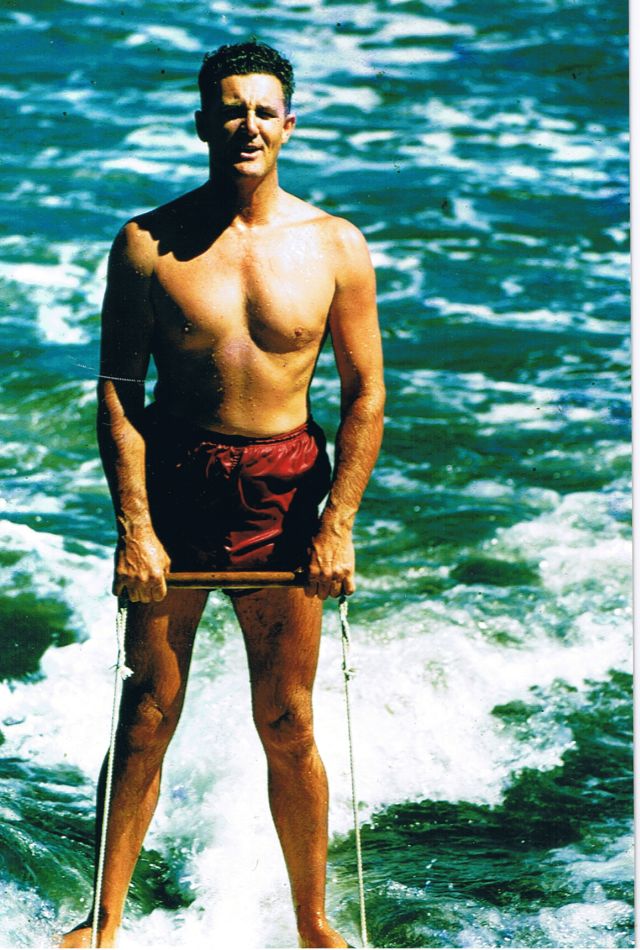
I am the child of two super-genetically blessed parents.

Norm Aquaplaning 1

My dad, particularly as a young man, was drop-dead gorgeous.

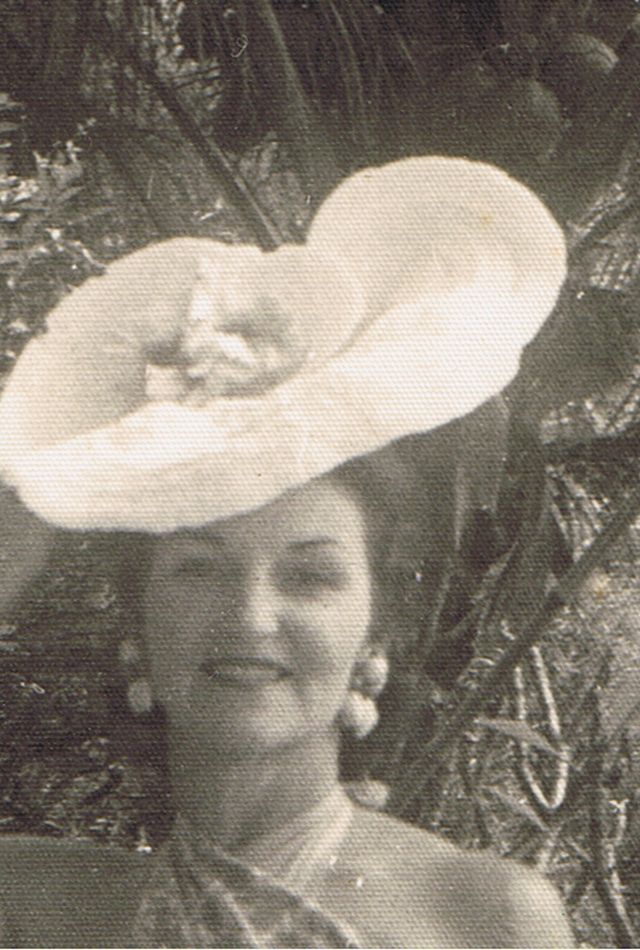
Daphne Dent Closeup

My mother, a former beauty queen, has always been admired for her beauty.

Together, even in their middle years, they made a pretty formidable – and daunting – combination!

Daph & Norm Panda

Growing up with these two ‘hotties’, I often felt like a bedraggled ugly duckling. While Mum strutted her perfect size 12 hour glass figure in the latest 70s fashions, I struggled with pudginess, a mop of thick, oily lank hair of a non-descript shade and a handsome crop of pimples.

Through no fault of my parents, who were loving, attentive and did everything they could to bolster my self-confidence, I felt like a cuckoo in this nest of advanced physical beauty.

At high school, I was considered one of the unpopular ‘nerdy’ kids. Tall and awkward I once sent a note around the class asking my class mates to comment on what I could change to make them like me (a social researcher even then!). The only comment I remember now is, “Wash your face” – probably a comment on my blackheads and pimples.

Getting on the bus in my school uniform, or walking down the street next to my immaculately groomed, glamorous mother was a special kind of torture.

As it turns out, I wasn’t such a bad looking kid, but I never had any confidence in my looks and that affected how I led my life and the choices I made – often in a bad way.

When I got old enough to attract male attention I grabbed onto it without discernment, thinking that any attention from any man was the best I could expect. Thus began my life as a bikie’s moll!

Chrys Teen

I fell in love when I was 24 years old. Hard. Soon after, the object of my affection was posted to a job 600 miles away. When he rang and asked me to send him a photo of myself (“… in a bikini, please”) I should have been thrilled. Instead, I was mortified! I was a size 14 for Christ’s sake! How could I let anyone see me in a bikini????

But, eager to please, I starved myself for a week and jogged after work every afternoon. I bought a bikini (I didn’t own one) and cajoled my mother into taking a polaroid photo of me on the beach at Caloundra while I assiduously sucked in what I thought was my huge fat gut. The photo was duly sent on with sinking heart.

I don’t remember his reaction to the photo. Back then (and now) I had a habit of blocking out compliments and only hearing and remembering negative comments about my looks.

I don’t know to what extent my poor self-image contributed to the failure of our relationship. In retrospect I can see that I internalised every comment that could be construed to suggest I was less than perfect and blocked out any action or inference that I was actually pretty damned sexy.  I always blamed him for our relationship self-destructing in spectacular fashion, but, looking back,  I can see how my needy insecurity probably didn’t help the situation.

After that, I didn’t exactly let myself go, but I piled on a heap of weight and did nothing to arrest the rapid expansion of my figure. I had lost the love of my life and fortuitously, being sexually unattractive saved me the angst of having to deal with unwanted male attention.

It’s not that I really thought I was ugly – I just didn’t (and didn’t really want to) think of myself as sexually attractive. I put all my efforts into being smart and, generally, I was pretty happy with the trade off. When questioned about my ‘weight problem’ I’d reply that I didn’t have a ‘weight problem‘, I had a ‘weight solution‘ – and that was absolutely true.

That first selfie was a bit of a revelation to me. I had thought of myself as unphotogenic – an impression reinforced by the toe-curlingly embarrassing insistence of people posting and tagging photos of me on Facebook without ever considering how fucking awful I looked.

Equal Love

But that first selfie suggested that maybe the truth about my appearance lay somewhere in between the ugliness of an inopportune ‘click’ at an unguarded moment and the fluke of a good angle and reflection from a pink scarf at a gathering of friends.  Could it be – possibly – that I wasn’t so bad looking after all?

After that, I started posting some selfies of myself online and enjoyed the compliments.

Chrys - School Marm

It gave me the confidence to have some professional publicity shots taken. I still didn’t feel gorgeous but I was beginning to feel that my self-image was gradually catching up with my growing confidence about my writing, my intellect and my aspiration to take on more public speaking roles.

Being confident about my appearance wasn’t only about valuing myself for how I looked, it was about getting that aspect of my self-confidence in line with other, more cerebral aspects.

Selfies helped me to understand that one bad photo doesn’t mean you look like shit. It just means you had one bad photo taken.

Taking a series of selfies – some good, some bad – reminded me that people don’t see you in ‘stills’ – they see you in motion; their concept of your physical appearance derives from far more than a single impression.

Selfies helped me to see that while I could look like Godzilla from some angles, from other angles I could actually look quite …. dare I use the word … pretty!

When some feminists dismiss the importance of feeling good about how you look, they miss the point, I think. To a large extent, how you feel about yourself in general is reflected in your physical appearance – how you hold yourself, dress yourself, look after yourself. It’s not just about winning the genetic lottery.

Now, some feminists might argue that I shouldn’t give two hoots if I look like shit – it’s my intellect, my talent and my accomplishments that matter. And, to some extent I agree.  But the reality is, you can’t just lop off the bit of you that the rest of the world sees first and pretend it doesn’t matter.  Confidence and pride in my physical appearance is not just skin-deep. It’s not just about vanity; about garnering compliments or male attention. It’s about feeling good about every aspect of myself for my own sake.

Becoming more concerned about and more confident about my appearance isn’t about abandoning my pride and belief in my talent and accomplishments – it’s just adding a little icing to the rich, spicy fruit cake that makes up the whole ‘me’.

With growing confidence, I started to invest in new clothes and jewellery. I began to walk a little taller. I had some more publicity shots taken and I thought, “Not bad – not beauty queen material but I’m not embarrassed to post them.”

_DSC9503

The process of self-acceptance was slow but steady.

And then, the impossible happened. The man who I’d sent that bikini photo to 30 years ago came back into my life.

Refusing to meet with him, I trepidatiously sent him some photos of myself, explaining that I had put on a LOT of weight since we parted more than twenty years ago.

I fully expected him to say, “Well, it’s been nice chatting,” and discretely disappear back into the ether. Instead, he dismissed my concerns saying that if I thought my size mattered one whit I had completely missed why he’d been so attracted to me way back then. Unlike me, he’d been looking at the ‘whole package’ – not just the wrapping.

I wasn’t convinced. I was sure if I could only make him understand that how I looked now was completely different to the young girl he remembered, he would slink away. I figured it would hurt less to be rejected via email than in person. I took a selfie of myself in my underwear.

Look!” I said. This is how I look now!

He sent back a one word reply. “Hot!”

I replied (somewhat in shock), “This isn’t the first photo of me I’ve sent you. Do you remember I sent you a photo of myself in a bikini 30 years ago?”

I confessed how embarrassed I’d been at the request and how mortified I felt having to send what I thought, then, was a most unflattering photo of a fat chick in bikini. Of course, I didn’t expect him to remember.

“I don’t just remember it,” he replied, “I still have it.  I’ve often looked at it over the years. I’ll bring it along when I meet you.”

And he did. And you know what? I was hot – smokin’ hot – and I never, ever knew it or got the chance to appreciate it or bask in it or make the kinds of decisions a girl might make when what she feels about how she looks matches up to her confidence in what she is.

How many absolutely stunning women do I know who absolutely hate how they look? And how does that lack of confidence cripple them in other areas of their lives?

I know one woman who looks like a young Jane Fonda who is so down on her appearance she is often suicidal. She blames her appearance for her inability to find a partner. In fact, it’s not how she looks, but how she feels about how she looks which is probably the biggest turn-off for men.

Another woman I know looks amazing to me from any angle but is horrified at the prospect of photos of her being posted on the internet. She simply can’t bare to look at herself.

If women can take control of their own images by taking selfies, posting the ‘good’ ones and getting some positive reinforcement from their social media contacts, I say, “Go for it!”

It’s unrealistic to think that women (or men!) can, or will ever, be able to entirely divorce their sense of self-worth from their physical appearance.  And why should we? Do I dismiss my intelligence because it’s something I was born with? No! I may have been born smart, but I’m proud of how I’ve capitalised on that particular gift. Increasingly, I’m beginning to view physical appearance in the same light; not as a shallow, narcissistic, skin-deep, irrelevant part of myself, but as a reflection of how I feel about myself holistically. 

Being proud of how you look is not about meekly conceding to some patriarchal image of feminine perfection. It’s about growing comfortable with yourself. It’s about embracing the physical features that don’t quite match the idealised notion of feminine beauty. It’s about recognising that while you may never grace the cover of Vogue, it’s your wonky bits that make you unique; that make you ‘you’.

It took me a long time to understand that showing your vulnerability and admitting your weaknesses makes you more, not less, interesting. In the same way, one has to learn that the physical features we instinctively hate might be exactly what makes us appealing to others. Strange, but true.

But, let’s not lie about this. Selfies are flattering. Taken from the right angle you can look far better than you’ll probably ever look in real life. When I sent the first sexy flattering selfie to my long-lost lover I felt honour bound to explain that unless he cared to hang upside down out of the manhole in our bathroom and gaze upon me bathed in the warm golden light of the bathroom heat lamp, he may never see me looking as good as I do in this photograph.

photo (71)

But, you know what? Knowing that (at least from the right angle and with the right lighting) I could look like that inspired me.

(Under no pressure from him!) I’ve since lost 15kg (and aiming for another 20kg), I’ve started wearing skirts and high heels again, and I have rediscovered a part of myself I’d shelved for years.  I’ve even bought another bikini!

chrys bikini

One day – soon – I’m going to really look like those flattering selfies and, feminist or not, I’m going to bask in the self-confidence of that knowledge. I’m happy to be both smart and sexy and I’m pretty sure that one is going to inform the other. I’m beginning to realise that denying a whole part of myself for twenty years was pretty bloody tragic. I’m taking sexy back!

If middle-aged women like me are taking selfies and thinking, “Wow! I look pretty good!” and it makes them walk a little taller, how is that a bad thing?

And, if young women are taking selfies and realising while they are still young that they are beautiful, desirable, and hot – whether or not they meet the magazine-standard of generic feminine beauty – I am all for it.

Youthful beauty doesn’t last and it seems a shame not to appreciate it, relish it and yes, even exploit it while you still have it.

I wish I’d known when I was 26 years old that I was as hot as that girl in the fading polaroid. My life might have been quite different.

Chrys Stevenson

Related Post

Why I love selfies – Mindy at Hoyden about Town

Selfies – Surly Amy at Skepchick

On looking hideous in other peoples’ photos – Alis Franklin at The Wyrd

GetUp! Climate Change Rallies

abbott-fiddling-global-warmI’ve been on holidays, staying with a friend whose business provides services to Queensland and NSW firefighters.

I watched him throughout the weekend, his mobile phone glued permanently to his ear, as he worked feverishly to co-ordinate assistance to a growing number of fires and ensure they had adequate resources to fight them. There was barely a moment, day or night, when that damn phone wasn’t ringing with another demand, crisis, question or request for more help.

My friend has been in this industry for years – he is intimately involved with the Australian bushfire season – and, in his opinion, there is not a shadow of doubt that climate change is having a significant impact on the number and severity of fires in this country.  The Climate Council agrees:

climate council

I’m sure if you spoke to experts in other fields, they would tell you the same about the impact on other aspects of the environment.

Yet, our new government seems set on ignoring the science and dismantling what little legislation we have in place to take action on climate change. It’s short-term thinking which short-changes everyone – particularly future generations.  Are we really so selfish that we cannot accept some small impost, some minimal increase in the cost of living to ensure we don’t get past the point of no return on climate change?

I think most Australians do want action on climate change and that the Abbott government is fooling itself to think it has some kind of ‘mandate’ to deny the science.  They remind me of the creationist who, when confronted with absolutely irrefutable evidence of evolution by Richard Dawkins, simply refused to even ‘hear’ him. It was as if she erected some kind of ‘cone of silence’ around herself to protect her from the force of his arguments. It was bizarre.

It is even more bizarre (and dangerous!) when you see a national government doing the same thing on climate change.

This weekend, GetUp! and its supporters are organising a number of climate change rallies across the country.  I’ll be going to my local rally (at Nambour, Queensland).  I hope that some of my readers might support the cause by turning up at a rally close to them.

The rallies are on tomorrow, Sunday, 17 November at either 10am or 11am (or later) – depending on location.

Sydney – Prince Alfred Park, 11am

Melbourne – Treasury Place, 11am

Brisbane – Queens Park, 10am

Canberra – Garema Place, 11am

Adelaide – Elder Park, 11am

Perth – Russell Square, 11am

Hobart – Parliament Gardens, 12pm

There are also hundreds of regional events so CLICK HERE and enter your postcode to find one near you.

I’ll be at the Nambour Rally at Quota Park, Mathew Street, Nambour.  Send an email to gladlybear@yahoo.com.au if you are going to that event and want to say ‘Hi’.

Chrys Stevenson

And, for those who haven’t seen it, Dawkins interviews creationist, Wendy Wright – a woman who is as obtuse as our Prime Minister is on climate change.


I get mail …

In response to my latest post on Bernard Gaynor’s Penis, I received the following email from a gentleman called Richard Foley.

This is not the sort of thing I’d usually publish given that it is full of misinformation and the usual old codswallop calling homosexuals ‘sodomites’ and equating homosexuality with pedophilia. But, as this is the kind of fuzzy thinking which is all too common among a certain type of reader, I thought it was worthwhile addressing. Here is the email which the correspondent Mr Foley (aka ozithortitan) has kindly given me permission to make public:

“Hi I see that you are a hipster feminist type & have just read your blog about that blokes dick you were carrying on about. Whilst I understand that generally childish response in your article, being of the philosophical & political persuasion you are, I feel that the issue of this whole gay marriage affair & the persistent bludgeoning of the general public with the issue should be better determined via a referendum as opposed to a well lobbied political class. 

The issue is seemingly cloaked with the persistent ramblings of it all being about “love” which in fact nobody is stopping considering the reality legal & otherwise of civil unions. You well know that the noisy minority activists within the gay movement have much further reaching agendas at play with their “marriage equality” clap trap such as eradicating the statutory age of consent. As a father of young children I am appalled by such notions on a moral & societal level & I should not be criticized for stating such opposition with the usual jamming techniques of “bigot”, “homophobe” & “redneck” etc etc.

If people like you persist in lobbying for the gay thing then at least be honest about what the actual act of gay sex is considering now that in the education system the gay sex issue is now being potentially promoted & included for our young kids in sex education.The fact is the vaginal structure has six layers of stratified squarish cells and is bathed in lymph, designed for friction; the rectum has only a couple of layers and is not designed for friction. Where virulent germs are concentrated, any disruption of the single layer of protective skin cells would immediately open the way to infection, with the chance of horrible diseases, among which would be amebiasis, giardiasis, shigellosis, hepatitis A and B, hepatitis non-A and non-B, and other parasitic infections these health effects were once known in past times medically as the “sodomite bowel syndrome.” Not to mention issue AIDS as well.

Now I’m not religious at all nor a fan of this Gaynor character but I feel that feminist/socialist lefty types like you need to be honest with the general public when discussing the promotion of the gay lifestyle & it’s potential health issues which I might add the taxpayer is funding via taxes in the medical area when these health related problems occur.

I await your reasoned & dignified response feel free to publish this email if you wish as long as you can offer a fair & reasonable critique of the facts particulary the medical ones I have outlined above.

Richard Foley

My reply to Mr Foley is as follows:

Wow! So much confusion in one short email!

I’m not sure that a middle-aged, middle-class woman can be identified as a ‘hipster’, but I’ll take it as a compliment.

You have no idea of my ‘political persuasion’. I am a swinging voter and have never belonged to any political party. On this blog, and elsewhere, I criticise members of all parties – Liberals, Labor and Greens, and give credit where credit is due.

Referendums are held to change the Constitution. Same-sex marriage is not a constitutional matter. A plebiscite could be held but it would be enormously expensive and is unnecessary given that polling data already shows majority support for same-sex marriage in Australia.

You’ve sent this email in response to a blog post about a person who is transgender.  Transgender does not equate to ‘gay’.  For example, some trans women are attracted to men, others to women, some are bisexual and some are not attracted to any sex. Some trans people remain in partnership with their wife/husband even after their transition. In other words, defending Ms McGregor has nothing whatsoever to do with promoting homosexuality. Frankly, Ms McGregor’s sexual preferences are no business of mine – or yours. For the record, I’m straight and not interested in ‘promoting’ any particular sexual orientation – each to their own.

I certainly do not ‘promote’ the ‘gay lifestyle’. Firstly, being gay is not a lifestyle – it is a sexual orientation. It is not something that is ‘chosen’ nor is it something that is changeable. Tell me, Richard, when did you decide to adopt a straight lifestyle?

I do support equal rights and protections for LGBTI people under Australian law, because I believe in justice and equality. As an advocate of ‘men’s rights’, Richard (I see you are on the personal mailing list of arch-misogynist, bully and conspiracy theorist Peter Nolan of Crimes Against Fathers) you argue exactly the same thing for your cause. You believe that women are given preference over men in the legal system (particularly in family law). Why then would you support a system which preferences straight people over gay people? You cannot ethically argue for equality for yourself if you don’t stand up for equality for others.

Now, with regard to anal sex. You are confusing homosexuality with a sex act. Anal sex is a sex act that some couples engage in – both homosexual and heterosexual.

Anal sex is practised by people of all sexual orientations – it’s a matter of personal preference, not sexual orientation. Many gay couples never, or rarely, practice anal sex. As a gay man on one forum said, “My partner and I have been together 17 years and we can count on one hand all the times we’ve tried it.”

Research suggests that while most gay men have tried anal sex, they are far more likely to participate in oral sex and mutual masturbation.

Many straight couples enjoy anal sex. This may shock you, but some men who don’t consider themselves gay, enjoy having anal sex with other men.  And some straight men enjoy having their female partners penetrate them with a dildo, vibrator or similar.

In short – anal sex is not equivalent to ‘gay’ sex.

According to one online source:

“It’s widely claimed that one third of gay couples do not include anal intercourse in their lovemaking. According to one estimate, about a third of heterosexual couples have tried it from time to time.

It’s thought that about 10 per cent of heterosexual couples have anal intercourse as a more regular feature of their lovemaking.

In absolute numbers, more heterosexual couples have anal sex than homosexual couples, because many more people are heterosexual.”

So, if hospitals are coping with a flood of people suffering from anal-sex related problems, odds are that the vast majority are heterosexuals, not homosexuals.

The transmission of HIV/AIDS via anal sex is obviously a concern. But, again, this is not confined to the homosexual community who (no thanks to the current Queensland Government) are increasingly well educated about the need to use protection. Young people would be at far less risk if sex education in schools talked about anal sex and how it can be practised responsibly – but I gather you are against that for fear it ‘promotes a gay lifestyle’. Again, talking about anal sex can’t make someone gay – but it can make them practice safe sex.

Figures on the transmission of HIV/AIDS in Queensland are somewhat outdated but this may be instructive. In 2005, the ‘men who have sex with men’ category comprised 73.5 per cent of the total new HIV notifications in Queensland (see Table 19, page 41). Today (latest figures from 2010), they comprise 63.1 per cent; a drop of more than 14 per cent. Meanwhile, the percentage of heterosexuals and ‘people originating from a high prevalence country’ have both increased. In other words, HIV/AIDS transmission via homosexuals is falling significantly while transmission via heterosexuals is on the rise.

Sure, there are health risks associated with anal sex, but, with education, they can be avoided. Mainstream medical advice seems to be that anal sex is safe, provided you take sensible precautions. Yet, you seem to be suggesting that we should be silent about anal sex and not educate children about the dangers and precautions they should take; that it should be a taboo subject.  Anal sex has been practiced since people started having sex and will continue as one of a suite of sexual options for both straight and gay couples.

Young fundamentalist Christians in the US are having pre-marital anal sex so as to remain ‘technically’ virgins on their wedding day and to avoid becoming pregnant. Because of their ignorance and a lack of education, they are placing themselves at risk. The Washington Post reports that Christian teens who ‘pledge’ sexual abstinence suffer from the same rates of sexually transmitted disease as those who don’t take the pledge.

“Although young people who sign a virginity pledge delay the initiation of sexual activity, marry at younger ages and have fewer sexual partners, they are also less likely to use condoms and more likely to experiment with oral and anal sex, said the researchers from Yale and Columbia universities.”

It is true that, without education about safe sex practices, anal sex is riskier than vaginal sex. But, we shouldn’t forget there are health risks (pregnancy being one of them!) associated with vaginal sex! There are few women who haven’t picked up a bladder infection or thrush from a sexual partner and, of course, having unprotected vaginal sex also puts one at risk of more serious sexually transmitted diseases.

Proper lubrication, hygiene, using protection and a bit of common sense circumvent most problems associated with anal sex, just as they do with vaginal sex.

You suggest that the campaign for same-sex marriage is associated with other agendas, such as lowering the age of consent. I am in contact with many LGBTI people and have the privilege of being admitted on to a number of LGBTI news groups. I can say, honestly, that even in private there is no suggestion, whatsoever, that the campaign for same-sex marriage is about anything more than the right to marry the person you love and, incidentally, about making LGBTI people equal in the eyes of Australian law. It is about removing discrimination – nothing more.

The age of consent issue is all together separate. The issue with the age of consent is that, in Queensland, it is different for straights and gays. This is contrary to equal rights for all and needs to be adjusted – especially as the penalty is a maximum 14 years in prison. The threat of a long prison term should a young gay person admit to being sexually active may discourage them from seeking education about sex or medical attention. Again, it is the wowsers and prudes who are exacerbating the ‘health problems’ associated with anal sex, not we ‘hipsters’.

Making the age of consent non-discriminatory is certainly not about homosexuals wanting to prey on young people. Homosexuality does not equate with pedophilia.

As the psychology division of the University of Southern California Davis explains:

“…  an expert panel of researchers convened by the National Academy of Sciences noted in a 1993 report: “The distinction between homosexual and heterosexual child molesters relies on the premise that male molesters of male victims are homosexual in orientation. Most molesters of boys do not report sexual interest in adult men, however” (National Research Council, 1993, p. 143)

USC Davis also cites another study in which Dr. Carole Jenny and her colleagues reviewed 352 medical charts, representing all of the sexually abused children seen in the emergency room or child abuse clinic of a Denver children’s hospital during a one-year period (from July 1, 1991 to June 30, 1992). The molester was a gay or lesbian adult in fewer than 1% of cases in which an adult molester could be identified – only 2 of the 269 cases (Jenny et al., 1994).

Civil unions is an apartheid option that does not provide full equality under the law to same-sex couples. When a gay man or woman falls in love, they should not have to say to their partner, “Will you civil union me?” That is not equality. Marriage is not a Christian institution. It is practised by people of all religions and of none. It is a legislative matter, not a matter of religion. The vast majority of Australians do not marry in a church, but in secular ceremonies presided over by a celebrant, not a member of the clergy. In a secular country there is no reason why marriage should not be available to both gay and straight citizens.

Now, your concern on moral grounds. Really? Are you the same ozithortitan (an unusual screen pseudonym) who said in response to a married woman on a fishing video, “I’d like to fuck the chick”? Are you the same Richard Foley who, on 29 April asked Catherine Deveny, “Can I do a turd in your mouth, Catherine?”

Foley

If so, may I say I’d feel far safer putting children into the care of any homosexual person I know than leaving them with you.

I do hope you appreciate this ‘reasoned and dignified’ response to your email, Richard.

Chrys Stevenson