I had lunch with High Court Challenge litigant Ron Williams last week. Over a meal of fish and chips, we chatted about his long battle against the Commonwealth and Scripture Union Queensland over Federal funding for the chaplaincy program at his children’s Toowoomba school.
Ron and I talked about the history of the program, its political context and the political purposes it served. We agreed that school chaplaincy – for politicians and for the parachurch agencies which supply chaplains – has very little to do with the real welfare and mental health needs of children.
We also talked about the skullduggery of the government in keeping this program alive, despite two High Court rulings that the Commonwealth has illegally expended close to half a billion tax payers’ dollars on a program they had no authority to fund.
The threat of legal sanctions for this kind of behaviour was easily solved – the government simply changed the law!
Over lunch, Ron confided that he is now pushing for a Senate inquiry into what he calls “possibly the most outrageous political stunt ever foisted upon the taxpayers of Australia”. Whistleblowers are already lining up to testify.
Today, The King’s Tribune has published an extensive article (written by me in consultation with Ron Williams), about the political motivations which underlie bipartisan support for the program and the reasons why there must be a Senate inquiry into this travesty of justice, democracy and public accountability.
To accompany the article, Ron has substantially updated his video detailing the history of his four year battle against the National School Chaplaincy Program, adding his personal appeal for a Senate inquiry,
Help the cause. Write to your local Senator today and demand an inquiry. Maybe send them a link to The King’s Tribune article and Ron’s video.
On 22 August last year I very trepidatiously stepped into a gym. I weighed 126.6kg – 3kg down from my heaviest weight of over 129kg. (Now, I confess, I did cheat a bit – having two major cancer surgeries removed a few bits and a kilo or so. My doctor tells me those kilos “don’t count”. I say all’s fair in weight-loss and surgery!)
The week before, I rang the gym and spoke to a nice man called Peter who said, based on my height, I should aspire to be around 72kg and that would take 12-18 months solid work.
I was taken aback. 72kg! 12-18 months??? Oh, no, no, no! I wasn’t up for extreme weight loss. I wanted – needed – to drop back to a weight at which I remembered being fairly comfortable and feeling just a little bit sexy, but that was taking things too far.
“No!” I said, perhaps too abruptly. “I’m not looking to go that far. I worked out if I can lose 1kg per week I’ll be around 95kg by next Easter. That’s all I’m aiming for.”
“OK,” he said, “It’s up to you.”
I signed up for the gym and started on a very low impact 30 minute workout. I also started eating ‘clean’ and reducing my portion sizes. Early in the piece, someone suggested I use My Fitness Pal to track my calories and that has been hugely helpful in keeping me ‘honest’.
Once I worked out how many calories per day I could eat and still lose 1kg, I just kept to that.
The mantra, “If what you’re doing is working just keep doing it,” kept me off the chocolate eclairs and on the treadmill.
Because one tends to lose more than 1kg per week in the very early stages of weight loss, I reached the 95kg target well before Easter 2014.
“Oh well!” I thought, “Might as well keep going until Easter and aim for 90kg.”
So, I did, and got there pretty much on target.
“That wasn’t so bad,” I thought. “Maybe I should just lose another 5kg so I can hover between 85 and 90.”
But, at 85, I found I was between two sizes (14 and 16) and it made buying clothes difficult.
So I thought, “What the hey! Another few weeks and I can get down to 80 and be a comfortable size 14.”
At 80kg, I decided to try for 78kg so I could do the ‘hover’ thing. 78kg became my new ‘target’ because I knew that I didn’t want to be super skinny and it was a weight at which I’d be very comfortable. This was the weight I was in my 20s. Then, because of the pressure put on women, I thought I was fat. Now, I was determined to be 78kg and wallow in the knowledge it is definitively not fat!
And today I reached that goal. Thursday 31 July 2014, 11 months and one week after I began, I weighed in at 77.9kg.
Now – don’t laugh – I will lose a little bit more just to allow for weight fluctuation, but really, that’s it. I’m done. The ‘weight loss project’ is over and now the hard work of maintaining it begins.
I don’t expect it to be hard. I didn’t go ‘on a diet’ so I won’t be changing the way I eat .- although I may allow myself three pieces of chocolate instead of two, a sandwich for lunch instead of a fruit platter, and a meringue with my coffee (on occasion).
I won’t go back to drinking alcohol – I don’t miss it; although I won’t knock back the occasional celebratory glass either.
And I will keep exercising – although five days a week at the gym is not on my long-term (or even short-term) agenda. I do try to do something – walk, gym, swim or gardening – for an average of 45 minutes per day. I’m not sure where the limits are with this new stage, but I’ll find them and, when I do, I’ll stick with whatever works.
There are some things I’ve learned on this journey, which I’d like to share.
The most helpful, supportive thing that anyone did for me was to tell me I was ‘hot’ just the way I was – that the size or shape of my body had nothing to do with how they felt about me. Then, they both supported and delighted in my decision to lose the weight because it pleased me and they wanted me to be fit and happy and confident.Not once did they make a derogatory remark about of how I used to look or question my weight loss decisions. They just stood on the sidelines admiringly and said, “Well done!”
That, was a gift beyond measure. It was the nicest, most precious thing anyone has ever done for me.
My friends and readers have also been hugely supportive and tolerant of the barrage of selfies and breathless “down another dress size” posts when they signed up to follow me for religious and political comment. For those who are sick to death of the weight loss thing, I’ll try to ease back on it now. To those who’ve shared my excitement and had fun joining in with my personal transformation, I say “Thank you! You’re weird, but you’re wonderful.”
So many people think they can bully or shame people into weight loss. It’s counter-productive. One (immediately ex) boyfriend said, “You used to be so beautiful … what happened?”
And most women have heard the ‘well-meaning’ comment, “You have such a lovely face, you’d be so beautiful if you just dropped a few kilos.”
You know what? I think I was beautiful before I lost weight. All that’s changed now is that clothes shopping is easier and more fun. I haven’t morphed into Elle McPherson. I’ve still got droopy boobs and a soft puppy tummy – I’m not perfect and I don’t want to be. I embrace my imperfections – they tell the story of my life. I like to think they give me character. That’s my story and I’m stickin’ with it!
I don’t think women should lose weight or should have to lose weight. I just think you need to find out where you’re happy. I was happy being fat for a lot of years because it served a purpose. Then, there came a point where that protective layer of flesh just seemed – well – superfluous. It was like a winter coat in the middle of summer. I just felt I didn’t need it any more.
It’s about agency, not expectations. And I don’t think it’s helpful to suggest to a person who’s wearing a winter coat because they need it to keep warm – perhaps even to stay alive – that they should take it off. Let them decide what to do, when and if the season of their life changes, and support their decision.
I’ve changed the decor in my house recently because I’ve changed. ‘Country cottage’ didn’t seem to reflect me any more. I’ve gone for a weird mix of French provincial/modern steampunk/eccentric Edwardian explorer’s study. It wouldn’t suit everyone’s taste but then, neither do I. (Here’s hoping ’empty bank account’ suits the new me, because redecorating – even via eBay and Gumtree – ain’t cheap!)
The redecoration is not a revolutionary change – it’s an update – a bit of zhushing. That’s a bit how I feel about the weight loss. There came a point when my life was changing and I looked at my body and thought, “Who the fuck is this? It’s not me anymore. It’s not what I feel like inside. It’s not who I want to be now.”
For me, losing weight was about being reassured that I was beautiful, nurtured, loved and admired just-the-way-I-was; that my worth as a woman or as a human being did not depend on my body. Somehow, that realisation set me free to embark on a journey to discover ‘the real me’. That doesn’t mean larger me wasn’t real. It just meant that I changed, my view of myself changed, so the soft-furnishings had to go.
Of course, it hasn’t just been about the size of my body. It’s been about reassessing my life, my priorities, my goals, my attitudes and my ambitions. At the beginning of the year I chose “Defying Gravity” as my theme song and although my boobs seem not to have complied with the directive, I think the rest of me has done pretty well.
So here I am. “Mischief managed” as they would say in Harry Potter. I saw this sweatshirt on sale at Big W last week and I thought, “That’s it! That’s what I want to wear the day I reach my goal.”
Apparently I wasn’t the only person to be taken aback by the news that Labor leader, Bill Shorten, has agreed to be the keynote speaker at the Australian Christian Lobby’s forthcoming conference. When I rang his office yesterday, his very polite staffer acknowledged they’d been deluged with complaints.
I was planning to write a blog post in the form of an open letter to Mr Shorten until I came across this letter from Adamm Ferrier on my friend, Doug Pollard’s, Facebook page. It is beautifully written and really says everything I wanted to say.
Adamm speaks for me (except for the ‘church-going Anglican part!) and, I expect, his words reflect the thoughts of many of my readers.
If they do, you may wish to contact Mr Shorten’s office yourself.
Dear Mr Shorten,
I met you once, back in 2008 when you visited the Western Hospital in Sunshine Victoria. I was impressed at the time at your integrity and earnestness. I have continued to be impressed by your integrity despite the circus of musical-chair Prime Ministers – both of whom, I might add, appeared to have every virtue as far as the public were concerned excepting team playing. One can understand the political desire to gain a majority in the lower house, but frankly, I simply don’t know what the Australian Labor Party stands for any more. The ALP might just as well change its name to “Not the Liberal Party”, rather like “Not the Nine O’Clock News” but without the irony, charm or intentional humour.
I am a regular church-going Anglican. So I feel somewhat qualified to consider the Australian Christian Lobby as nothing short of a sanitised Ku Klux Klan, and find it difficult to understand why any political party in its right mind would lend credence to this most unChristian of organisations.
If you feel the overwhelming need to court this group of right wing lunatics then by all means do so: but remember, a leopard cannot change its spots. They will never endorse the Australian Labor Party: never in a million years. Not even with your undoubted charm and charisma and boyish smile. Never, mate. Never.
One day, I hope, someone with some sense in the party will connect the dots: Australians don’t give a tinker’s cuss if people are religious, but the vast majority resent moralistic views being shoved down our throats by a self-appointed and self-righteous federal lobby group.
Only a fool would think that courting the ACL could result in an electoral dividend for the Australian Labor Party.
Exasperatedly yours
Adamm Ferrier
Adamm Ferrier, RN, holds a Masters degree in Health Science Administration and is a lecturer and doctoral candidate at the School of Public Health & Biosciences at La Trobe University.
Clearly, Adamm Ferrier’s views are his own and do not reflect those of La Trobe University.
Transcript of my presentation on losing weight skeptically for Skepticamp, Brisbane Skeptics Society – Saturday, 19 July 2014
This is me on Christmas Day 2012. I was Size 24 and weighed over 129kg.
In August last year, I decided to lose the weight. Since then, I’ve dropped 50 kilos – a fairly consistent loss of a kilo per week over nearly 12 months.
My doctor calls me The Incredible Disappearing Woman.
I’m not a weight loss evangelist. If you don’t want to lose weight that’s absolutely fine with me.
But, if you need to or want to lose weight – I’d like to suggest that you do it skeptically.
People keep asking me, “How did you do it?”
And when I say, “Diet and exercise” you can see their faces fall, poor pets.
“Oh,” groaned one guy who clearly thought I held the secret to demolishing the verandah over his toolshed, “I was hoping you were going to say something easier than diet and exercise.”
Here’s the billion dollar secret. Losing weight is about maths, not myths.
You will gain weight if you eat more calories than you burn.
You will lose weight if you burn more calories than you eat.
It’s so astoundingly boringly simple. I may have to throw in a little pole dancing to make this speech entertaining.
Or maybe not ….
It’s not an exact science but, basically, weight loss can reduced to a simple formula.
It amounts to this. You need to know how many calories per day you burn at your normal activity level, you need to boost that with some calories burned with extra exercise, and, to lose ½ kilo per week, you need to eat around 500 calories per day less than you burn.
The good news is that even if youspend the entire day on the sofa you’re still burning calories – quite a lot of them. This is your basal metabolic rate – the calories you burn just being a sloth
I’m a writer. My activity level is somewhere between comatose and death. Frankly, I just based my equation on the sloth figure.
You’re going to have to do extra exercise. Exercise buys food calories and the object is to reduce how much you eat, not to starve or even to feel hungry. Be realistic. Work out how much extra exercise you can do and factor the calories you’ll burn into the equation.
There are roughly 3,500 calories in half a kilo. So, to lose half a kilogram per week, you need a calorie deficit of around 500 calories per day. If you want to lose a kilo, you need to subtract 1000 a calories. But, be aware, you’ll almost certainly need to increase your exercise significantly to buy more calories to eat or you’ll be on a starvation diet.
Please, don’t eat less than the minimum recommended number of calories without consulting your doctor.
Now, I need to make a major disclaimer here. This is not a magic formula! The figures are a bit fuzzy because half a kilo isn’t exactly 3500 calories but somewhere between 2000-5000.
Your individual physiology and size comes into it and estimating how many calories are in the food you eat is never going to be exact.
But that doesn’t mean it won’t work. It just means you may have to juggle the figures a bit to reach your weekly target.
It’s a starting point. You may find you have to eat less or exercise more. I had to do both, but I did it in consultation with my doctor. You may find you can eat a bit more or exercise a little less and still reach your goal. Good for you! I hate you!
The formula isn’t a ‘magic pill’. But it gives you a no bullshit starting point. And, for most people – not all – but most – eating less calories than you burn will result in weight loss. It ain’t rocket surgery!
Technology can help. I use two free phone apps to help me track my calories in and calories out – one is called My Fitness Pal on which I log everything I eat and all the exercise I do.
And one is called Moves – it makes it easy to track how far and for how long I’ve walked.
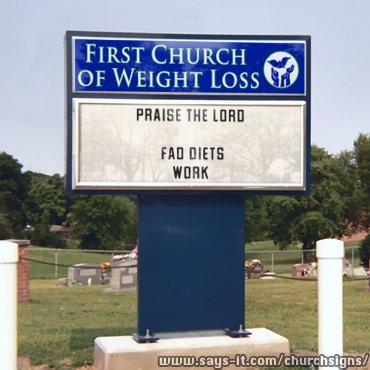
Now, here’s a revelation– FAD DIETS WORK!
Because virtually any diet that drops your calorie consumption below your calorie expenditure will make you lose weight, any diet will work – as long as you stay on it, or don’t die in the attempt.
The weight loss industry is a multi-billion dollar scam; not because you won’t lose weight with Weight Watchers or Jenny Craig or by drinking diet shakes, cutting carbs, food combining or doing the Lemon Detox. It’s because, realistically, unless you keep paying out to these companies, few people will have the willpower or discipline to keep to their diets.
As for diet books, all the way out claims about miracle foods, super foods, eliminating toxic food groups, or other ‘weight loss discoveries are mostly complete and utter bollocks. If the diets work they work because they limit the number of calories you eat. The rest is gimmick.
You don’t need someone else’s diet plan. In fact, if you go on someone else’s plan you’ll almost certainly fail in the long term because it’s theirs – not yours – and you’re always going to revert to what’s familiar to you.
You don’t want to go ‘on a diet’ at all because that suggests it’s something you are going to go ‘OFF’. Instead, you need to work out a strategy for eating less calories, by modifying what you eat now. You need to look at your calorie allowance and your current eating habits and work out what foods you can keep, what you’re willing to sacrifice, what you can keep if you reduce portion sizes, and what you can swap for lower calorie alternatives.
You will have to change the way you eat. But you don’t have to revolutionise it. It’s really not hard.
Here’s a typical day for me.*
Breakfast: Sour dough toast, lightly buttered with poached egg
cup of white coffee (skim milk, sweetener).
Morning tea: White coffee (skim milk, sweetener)
Lunch: Fruit platter AND 3-4 cracker biscuits topped with hommus
Afternoon tea: Skinny cappuccino (sweetener)
Pre-dinner: Diet Coke in a good wine glass, 30g soy rice crisp snacks
Dinner: 100g salmon fillet , home-made tomato sauce, steamed broccolini and brown rice
After Dinner: (If I skipped the rice crisp snacks) White Coffee (skim milk, sweetener) and
2 squares Lindt chocolate.
But I’m not suggesting you copy what I eat. It’s up to you – not anyone else – to make your food choices – but do try to make healthy ones.
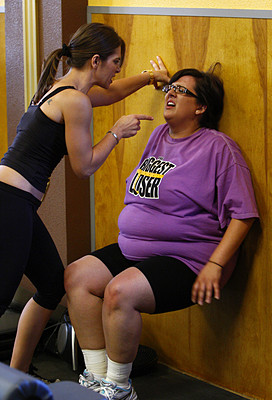
The good news is that one of the biggest – and most harmful – myths about weight loss is that you have to go through Biggest Loser style torture at the gym to lose weight.
Going to the gym isn’t like that. And if it is – find a new gym!
That show didn’t encourage me to lose weight – it made me terrified to set foot in a gym. Luckily, I did join my local gym and I can honestly say that I lost 50kg, and got fit and strong and toned, with very little loose skin, without ever once going faster than a brisk walk, lifting more than 5kg or raising more than a light sweat.
I’m built for comfort, not speed. I have never worked out until I threw up. I Iost 50kg without once having to tie a tow rope around my waist and pull either an F-111, a semi-trailer or a locomotive. Occasionally I puff and pant a bit – that is the extent of my exertion.
Honestly, I’m still not fussed about exercising but I figure it’s the rent I have to pay for the new body.
Once I started talking about weight loss on social media I started getting hammered with weight loss myths – even from my sceptical readers.
One of my Facebook readers scolded me for ignoring the fact that obesity might be due to genetic predisposition or to the inadvertent consumption of MSG.
“It’s not just about diet and exercise, Chrys!”
When I was fat, even I used to buy into what’s been dubbed, fat fatalism. But, except in rare circumstances, it’s bullshit.
I am genetically predisposed to being overweight, I’ve had a hysterectomy, I’m menopausal, I suffer from chronic fatigue, and I have an underactive thyroid. Yet, fuck me dead, when I started exercising and counting calories the weight just melted off.
It’s OK to be fat! What isn’t OK is to believe that you can’t be thinner if you want to be. That misguided belief takes away your choice.
Sure, you might have a genetic predisposition to gain weight, but a 2011 study of nearly quarter of a million people showed genetics can be offset substantially with diet and exercise. And the idea that MSG causes weight gain is a myth. It’s as silly as claiming that mercury in vaccines causes autism. The only ‘hidden additive’ in food that is causing your weight gain is calories.
Many peopleassume I must have gone on an exclusion diet. What did I ‘cut out’ I’m asked. The assumption is that sugar and fat and carbs make you fat so they have to be eradicated in order to lose weight. Sugar, fat and carbs are essential nutrients. They aren’t ‘bad’ for you. In reasonable quantities they won’t make you fat. What is bad for you is too many of them.
Weight loss is about maths – calories in and calories out. Weight loss myths abound and even skeptics fall for them. I fell for them.
People of all sizes are beautiful. I have no tolerance for fat shaming. But, I’m a big advocate for personal choice.
And the good news is by counting calories and adding some gentle exercise you can almost certainly choose to lose weight, cheaply, relatively easily and keep it off long term. And if someone tells you it’s more complicated than that, just say, “Weight a minute – that’s bullshit!”
Chrys Stevenson
* Anticipating the naysayers and food nazis out there, this is a ‘typical’ day’s eating for me only is that it reflects the kinds and quantities of food I may eat during the day. I don’t follow a ‘diet’ or a ‘plan’ so it’s not what I eat every day. Please don’t extrapolate this and say, “She eats too much [xyz]!” or “She doesn’t get enough [zyx]”
You can’t take this an assume it’s all I eat. Some days I eat more. Some days I eat less. It evens out over a week.
Sometimes I’ll have more salad, sometimes a day will include more carbs or protein or fibre or, (shock!) fat! I try to eat a balanced diet, but I’m no fanatic. If I’m out and about, lunch will typically be a smoked salmon sandwich on multigrain bread with lettuce and cucumber. If I go out to dinner, I try to order something low calorie but, if nothing particularly low calorie is available, I order the best I can find and perhaps eat half. I started out feeling a bit deprived by having to choose ‘low cal’ – now I find when I look at a menu those are actually the meals I gravitate towards. I’ve lost the stomach for pasta carbonara – literally!
I no longer drink alcohol at home, but I do have a glass or two on special occasions. Moderation is the key.
If it’s a special occasion, I eat what I want (without going overboard!) and I eat lightly for the next couple of days and try to do a bit more exercise.
A transcript and video of my speech to the NSW Humanists’ June 2014 symposium on the Enlightenment are now available online.
The transcript is fully referenced with a bibliography for those who’d like to know more about 19th century British philosopher, Jeremy Bentham’s remarkable impact upon Australian society, culture and national identity.
I never had a weight problem. I had a weight solution.
12 months ago I was given an opportunity to deal with the problem I’d solved with a 50kg protective layer. It’s a private matter, but forgiveness, love, and a commitment to just let the fucking past go was a big part of it.
With great trepidation, but an equal amount of determination, I decided the time had come to lose the weight and become ‘me’ again.
But how?
I’d lost weight previously. In the 1980s I lost about 10kg in 6 weeks on the Beverly Hills Diet. When the six weeks was up I was as skinny ‘as’ but starving!!!! I literally wolfed down a hamburger on the final day of the diet and didn’t stop eating until I put it all back on …
In the 1990s I decided that ‘fat makes you fat’ and I lost another 10kg by virtually eliminating fat from my diet. Combined with exercise it worked. But, it wasn’t sustainable. At the first hiccup in my life, the diet and exercise stopped and the weight went back on – plus another 30kg!
When you’re that weight losing weight seems pointless. I figured that even if I lost 20kg I’d still be fat so, really, why bother?
It wasn’t until I met some ‘real people’ – people I knew – who had lost 30-40kg that I began to realise that extreme weight loss was possible; that you didn’t have to have your stomach stapled, spend 12 months at a weight loss facility in China, or sign up for The Biggest Loser to shed that kind of weight.
And, having embraced skepticism, I knew that if I was going to lose weight I was going to do it skeptically. I knew that the weight loss industry was a massive scam, and my ‘gut’ instinct was that the secret to weight loss was Keep it Simple Stupid. Still, I did some research and discovered that losing weight is about maths, not myths.
So, I applied some common sense but not particularly radical changes to my lifestyle and eating habits and, voila, we’re less than 12 months down the track and I’m 50kg lighter. I’ve gone from a size 24-26 to a size 12-14. My doctor calls me “The Incredible Disappearing Woman”.
Next weekend, I’ll be speaking about this rather thrilling achievement at Brisbane Skepticamp in a speech entitled, “Weight a Minute. That’s Bullshit!”
The event begins at 1pm on Saturday, 19 July at the Hamilton Town Hall, Brisbane. I’m scheduled to speak at 6.20pm (but it might be a bit later or earlier depending on how the day goes).
If you’re in or around Brisbane and interested in weight loss (or in other skeptical issues – I’m not the only speaker!) it would be great to see you there. The event is officially sold out, but you can email the organisers if you roolly, roolly want to come and they’ll see what they can do. Drop my name. It will make no difference at all, but I enjoy being dropped.
If you can’t make it but you’re interested I’ll be writing more on this subject soon.
I’m not advocating that anyone loses weight. My weight served me well. It kept me alive. But, for those who want to lose weight and think they’re ready to deal with the reason why they got fat in the first place, the solution lies not in expensive diet programs, miracle foods, eliminating food groups, food combining, or other fad diets. It’s simple, easy, achievable and sustainable. Maths. Not myths.
“My right to swing my religious fist is being crushed by those demanding I not contact their face.” – Justin Schieber (@justinsweh)
Martin Boers (@MartinBoers), Laming blog
Regular readers will know I very rarely host guest bloggers. Last week, however, I came across a post from Martin Boers, a parent of school-age children and a passionate advocate for secular education. Martin’s post is so well-written and topical I had to share it. He has kindly given me permission to reblog it here on Gladly.
On his Laming blog, Martin responds to an article in the Adelaide Advertiser by Peter James, CEO of Scripture Union Queensland, the evangelical, missionary organisation which supplies the majority of Queensland’s school chaplains. He takes James to task over his complaint that the public debate over chaplaincy is characterised by ‘anti-religious cheap shots and mocking’.
James’ article, in turn, responds to a piece by Tory Shepherd, which asks how Australians would react to the contention there should be an imam in every school.
I’ve met Peter James. He’s a nice enough man – certainly an improvement on his predecessor, the rock-jawed and intellectually vacuous Tim Mander. But, as Martin points out, James’ thinking is as clouded and woolly as one might expect from someone who accepts the Bible as the literal truth and sees the imposition of his particular brand of Christianity as a sacred entitlement – the denial of which he interprets as ‘discrimination’ and ‘religious vilification’.
Peter James is the CEO of Scripture Union Queensland and the spokesperson for the National School Chaplaincy Association. An opinion piece from Peter James appeared in the Adelaide Advertiser on 26 June, which was full of poor arguments and downright untruths in support of the National School Chaplaincy Program.
This is my response to some of the statements made by Peter James in his article.Schools shouldallow, and be respectful of, all views.Wrong.Schools should allow and be respectful of all people.Schools should not allow or be respectful of the view that (for example) it’s acceptable to discriminate against any person on the basis of accent, gender, skin colour or sexual orientation.When it comes to matters of fact, schools should only teach things that are undeniably true (e.g. evolution) or things that are still the subject of genuine scientific research and debate (e.g. the origins of the universe), and are not obliged to “teach” every ridiculous claim that was ever made throughout history.
We do not need students to have a particular view imposed on them, but neither do we need students told their religious view is “crap’’, ‘‘snake oil’’, ‘’humbuggery’’ or ‘‘bunkum’’.Correct.
However, adults like Peter James do need to be told, for example, that intelligent design and creationism are “crap”, that the promise of life after death is “snake oil”, that intercessory prayer is “humbuggery” and that the claim “Jesus loves you” is bunkum. As Daniel Dennett says, “There’s simply no polite way to tell people they’ve dedicated their lives to an illusion.”
Children, on the other hand, need to be taught critical thinking and evidence-based reasoning skills, rather than being taught to accept ideas from an authority figure on faith alone. By equiping students with such skills, they will come to their own conclusions when presented with the ridiculous ideas that Scripture Union Queensland (and their counterparts in other states) would have kids believe.
Quite aside from questions of anti-discrimination and religious vilification, if a school system is hostile to students’ religious views it fails to achieve our national educational goals.
Wrong.
Religious organisations are NOT being discriminated against or vilified by being denied the opportunity to preach discrimination and vilification to children in publicly funded secular schools. This is a ridiculously naïve argument, which is surprising from a former lawyer like Peter James, since by this argument it follows that any crackpot cult can claim “discrimination” if they aren’t given free and unsupervised access to children in all public schools. This claim of victimisation has been formulated in a tweet from philosopher Justin Schieber (@justinsweh) as: “My right to swing my religious fist is being crushed by those demanding I not contact their face.”.
And the scrapping of the Chaplaincy Program does NOT mean that the school system is hostile to students’ religious views. I have never seen any indication that public schools care one way or the other what supernatural beliefs their students hold, and outside of school hours parents are always free to indoctrinate their children with whatever whacky ideas they choose. In fact public schools go further than they should in facilitating indoctrination during school hours through Scripture and Special Religious Instruction, when these “classes” should be consigned to the historical scrapheap.
And I thought that school chaplaincy wasn’t about religion anyway – it’s about “pastoral care”, isn’t it? So where does religious vilification come into it?
School chaplains … help students … develop positive self-image, confidence and resilience … and support students and the school community in times of grief and loss, when some of the big questions of life arise for them.
So do all teachers and parents. But for those students who need specialised, professional support, there is no evidence that minimally qualified religious chaplains are able to give anywhere near the level of support that qualified psychologists and welfare workers can provide. The implication in this statement from Peter James is insulting to the people who genuinely care about child welfare and who dedicate their careers to this work.
It is entirely voluntary, requires appropriate parental consents …
Wrong.
I never got a note from my school asking for my consent for the chaplain at our school to talk to my children, and I’m not aware of any parent that has. Peter James may be thinking of Scripture or SRI classes, which (at our school) also do not require consent – they require parents to “opt-out” their children – but at least there is that option.
In 2012, a 30-month longitudinal study of school chaplaincy by the Research Centre for Vulnerable Children and Families at the University of Western Australia found that the role of school chaplains is overwhelmingly valued by school principals, teachers, parents, students, psychologists and professional associations.
And in May 2014, an Essential poll found that only 5% of those surveyed supported the Government’s policy of funding only religious chaplains.
So while school chaplains are now funded through to the end of 2014 with no regulation, guidelines or government oversight, really worthwhile student programs like NSW Primary Ethics continue to grow quietly – without any financial support from the government – through the hard work of thousands of unpaid volunteers who want a better future for all children.
Also on the program were president of the Rationalist Society of Australia, Meredith Doig, well known humanist author, David Tribe, , Emeritus Professor Frank Stillwell, Unitarian Minister, Ian Ellis-Jones and treasurer of the Humanist Society of NSW, Dr Victor Bien.
My speech focused on 18th century Enlightenment philosopher and law reformer, Jeremy Bentham and his influence on Australia’s government, law, public institutions, history and national identity.
Although Jeremy Bentham never set foot in Australia his influence suffuses almost every aspect of Australian public life. In the speech I argue that far from Christianity being the dominant influence in the development of Australia, it is Jeremy Bentham who has most shaped our history, our constitution, our government, public institutions, even the way we shop! We are not a Christian nation, we are a Benthamite society.
The speech was recorded and you can watch it here. Later, when I have more time I will finish hyperlinking the transcript of the speech and have it published.
Senator Penny Wright (Greens, spokesperson for schools) made a fine effort today trying to get some answers from the government about Mr Abbott’s $37 million gift to chaplaincy providers (see my two previous posts).
You can watch Senator Wright grilling the government’s senate education representative Senator Marise Payne here (starts at 21:00).
Following is a media release from Senator Wright’s office.
MEDIA RELEASE
23 June 2014
Chaplains oversight gone as invalidated program continues
The Abbott Government’s response to the High Court decision will see chaplains and welfare workers remain in schools without any Federal Government oversight, says Australian Greens spokesperson for schools Senator Penny Wright.
Senator Wright said the Commonwealth Government’s explanation that chaplains and welfare workers would now be overseen by State governments was inadequate.
“The High Court decision means the chaplaincy program can no longer be funded or administered by the Federal Government – the Federal Education Department website clearly spells this out,” Senator Wright said.
“So all the guidelines, codes of conduct and complaints procedures have gone out the window.
“But because the Commonwealth has chosen not to recoup money not yet spent, chaplains and welfare workers will remain in schools until the end of the year.
“The Australian Government must not deny responsibility for this – the states cannot simply take over the Federal Education Department’s administration of the invalidated chaplaincy program.
“The Federal Government needs to explain how they will ensure the safety and wellbeing of students for the next six months.”
In response to the High Court decision invalidating the National School Chaplaincy and Welfare Program, the Coalition announced it would waive the subsequent debt on payments made to date, including $74 million for 2014 – allowing chaplains and welfare workers remain in schools until the end of the year.
This morning I blogged a lot of questions about Scripture Union CEO, Peter James’ claim that chaplaincy was funded up until the end of December – despite having been declared illegal by the High Court of Australia.
At the time, it was my understanding that chaplaincy payments were made quarterly and that the next tranche of funds was due on 30 June. Clearly, with the court decision falling prior to that date, that tranche, if due, should not have been paid.
It’s now become clear that, after the decision was handed down in Ron Williams’ first case and the government realised another High Court challenge was likely, they changed the funding arrangements. Now (at considerably more expense to taxpayers in lost interest), chaplaincy providers are paid yearly, in January.
So, here is the position as I understand it now.
Chaplaincy providers were paid, in advance, to provide a full year of chaplaincy services for 2014. That payment was made in January.
That money came from the $222 million the Gillard government committed to chaplaincy to cover a 3 year period; that is, $74 million per year – or $37 million per half year.
On 19 June, 2014, the High Court ruled that Federal funding for chaplaincy is illegal – and that all payments made to date have been illegal.
Technically, that money should have had to have been repaid to Consolidated Revenue but, not unfairly in my opinion, the Finance Minister waived the debt. Chaplaincy providers would not have to return money paid for services rendered.
But, now it becomes obvious that not only was the debt for services rendered waived, but so was the debt for $37 million(half of the $74 million annual cost) paid in advance to fund the program from June-December 2014; money that will be in the banks of the para-church organisations but not yet spent on chaplains’ wages.
Why has this amount been waived?
Fair enough that the chaplaincy providers don’t have to repay money already paid in wages to chaplains. But, the government has made it clear that, effective immediately, the National School Chaplaincy and Student Welfare Program can no longer be funded or administered by the Federal government. It is dead. Kaput.
Why then, has the government effectively gifted $37 million of taxpayers’ money to chaplaincy providers for services that have not yet been rendered for a program which has now been deemed illegal?
If we are as hard up as Treasurer Joe Hockey claims, how can we afford this $37 million gift to para-church organisations to go off and do their own thing for the next six months?
It’s outrageous and irresponsible.
That $37 million should have to be repaid. The scheme is no longer operative. The money has not yet been expended on wages. The money belongs in Consolidated Revenue, not in the pockets of the para-church organisations.



 y 2012. I was Size 24 and weighed over 129kg.